
Last updated November 2, 2026
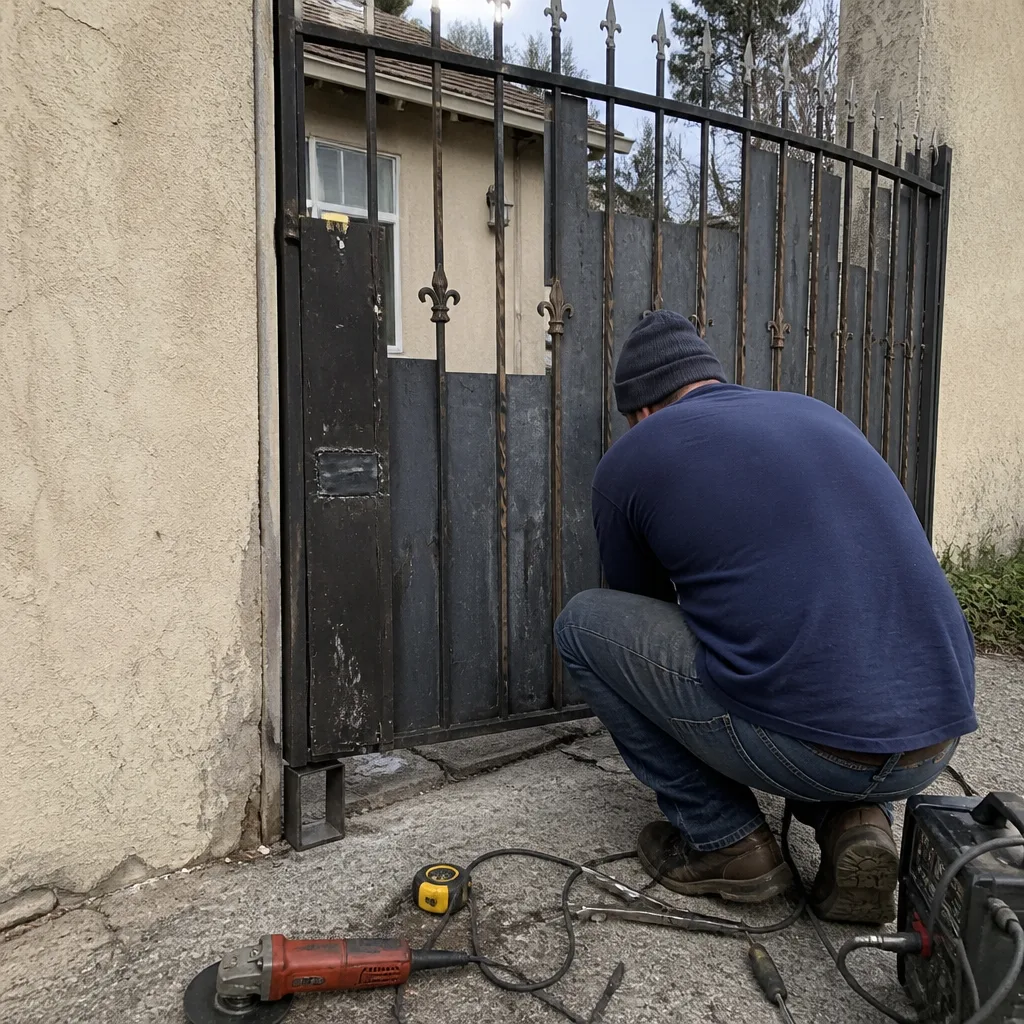
 Wrought iron
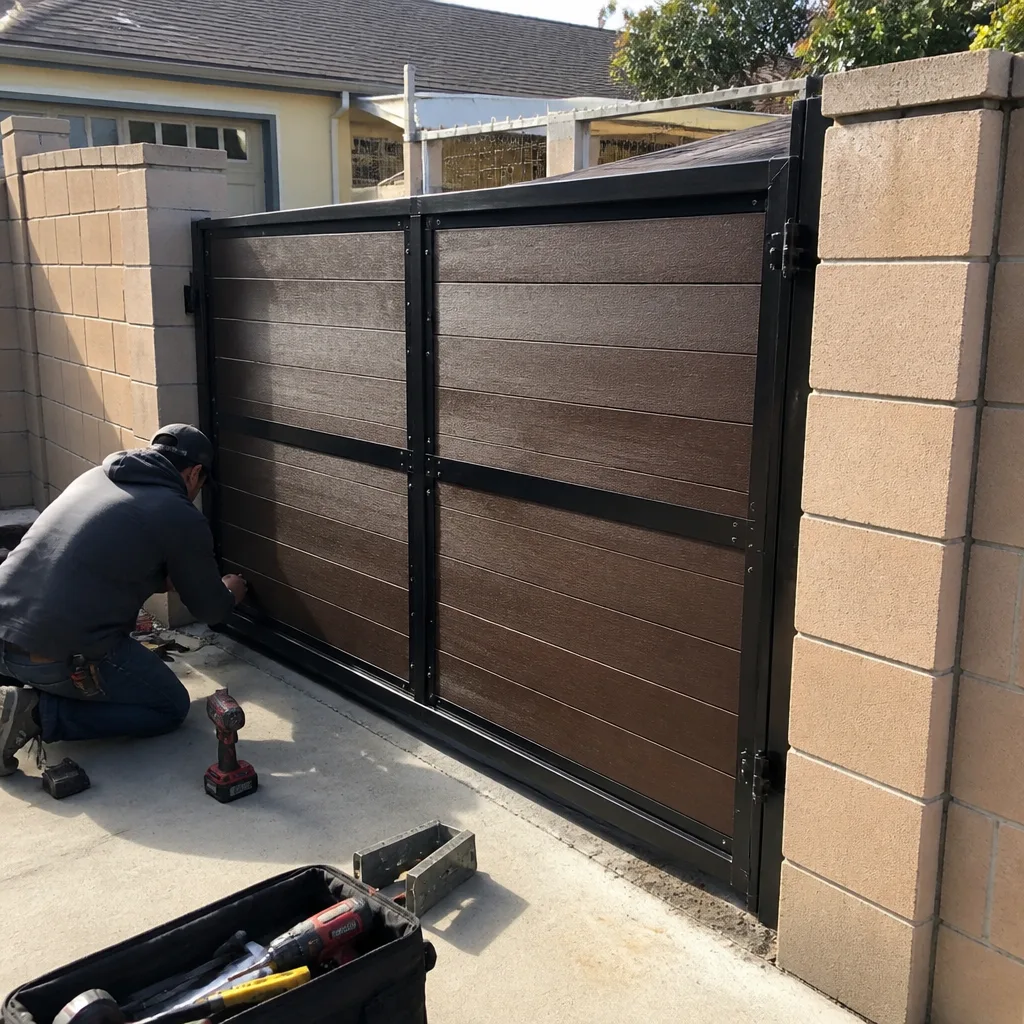
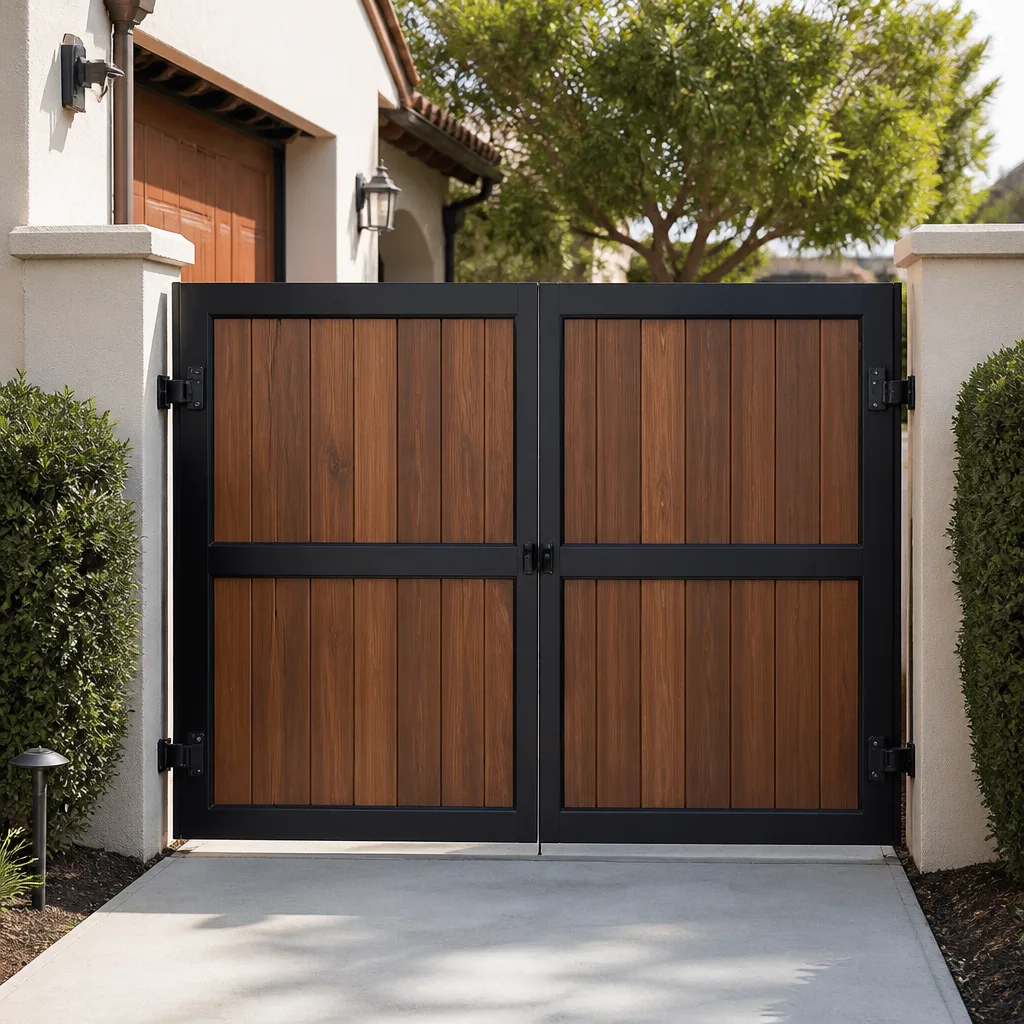 Wood & steel frame
 Farm & ranch
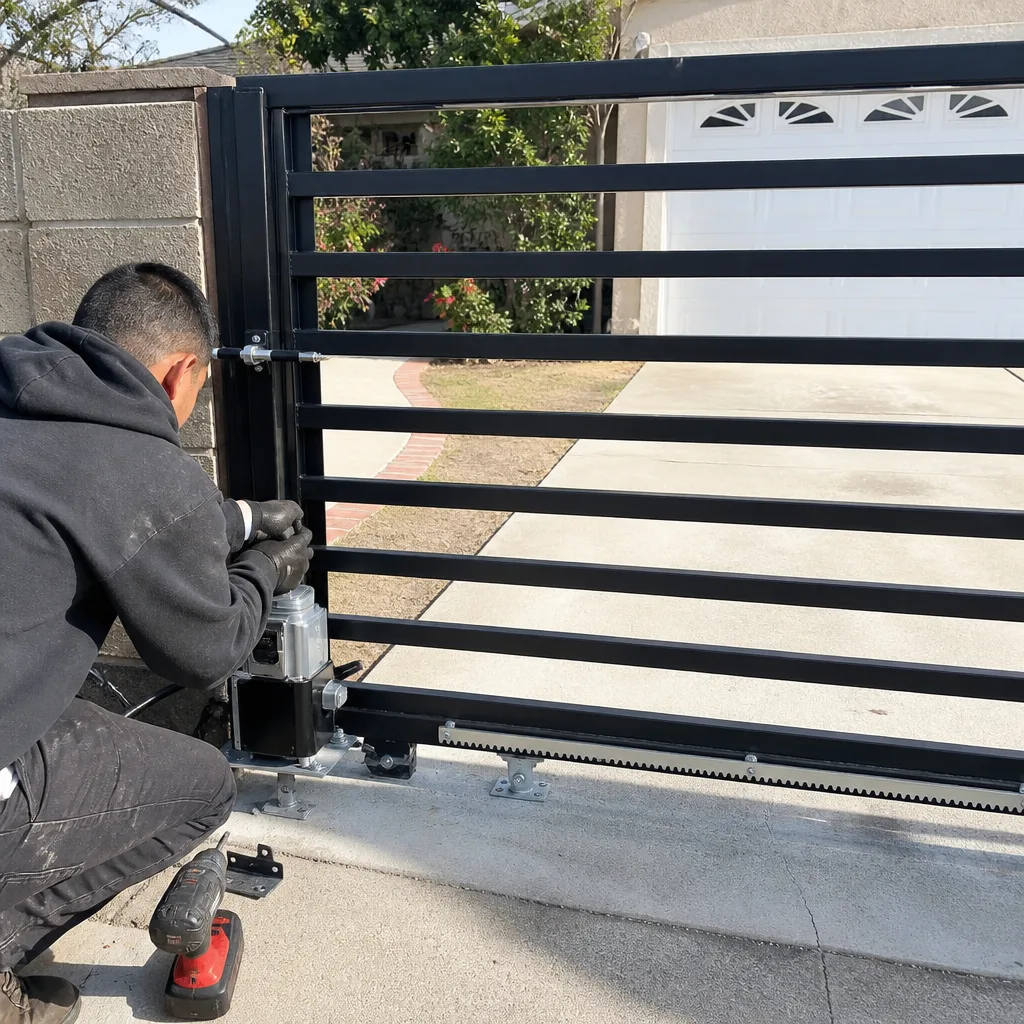
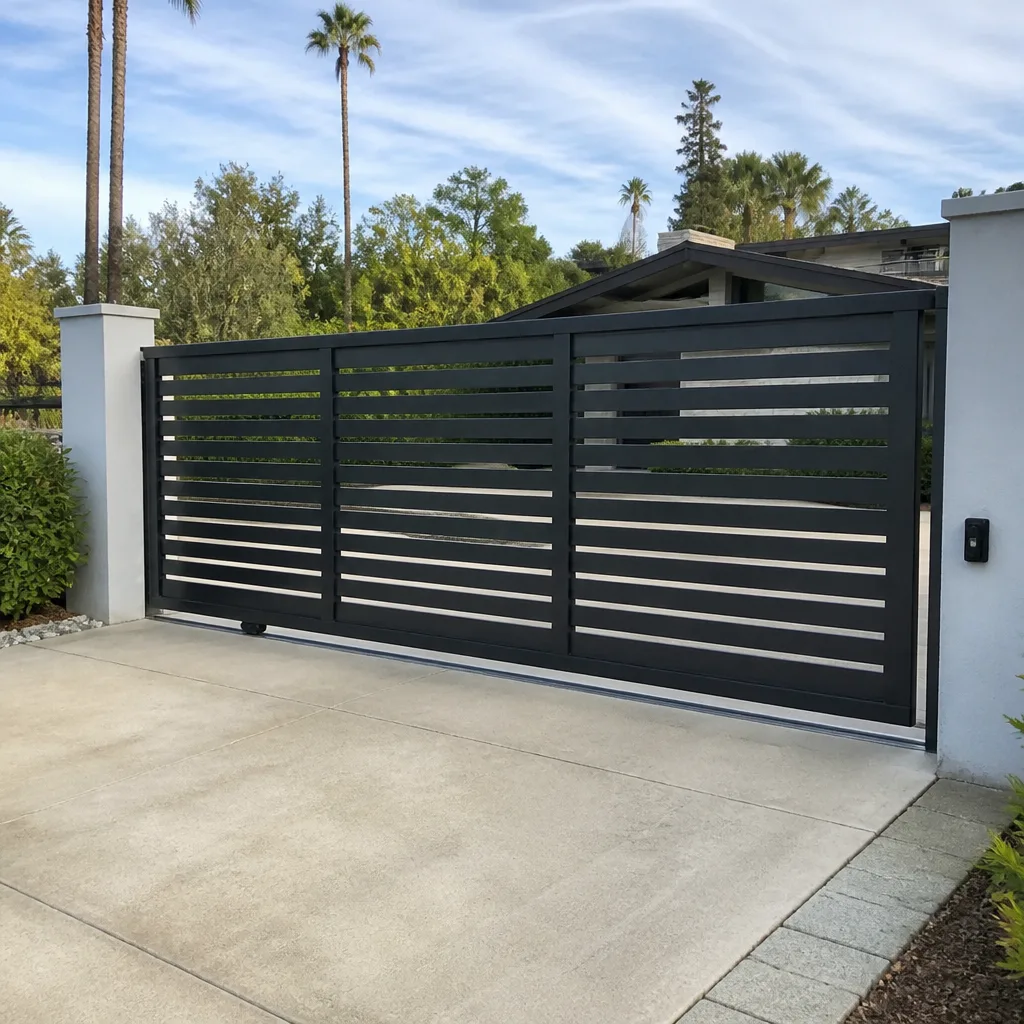 Sliding driveway gates
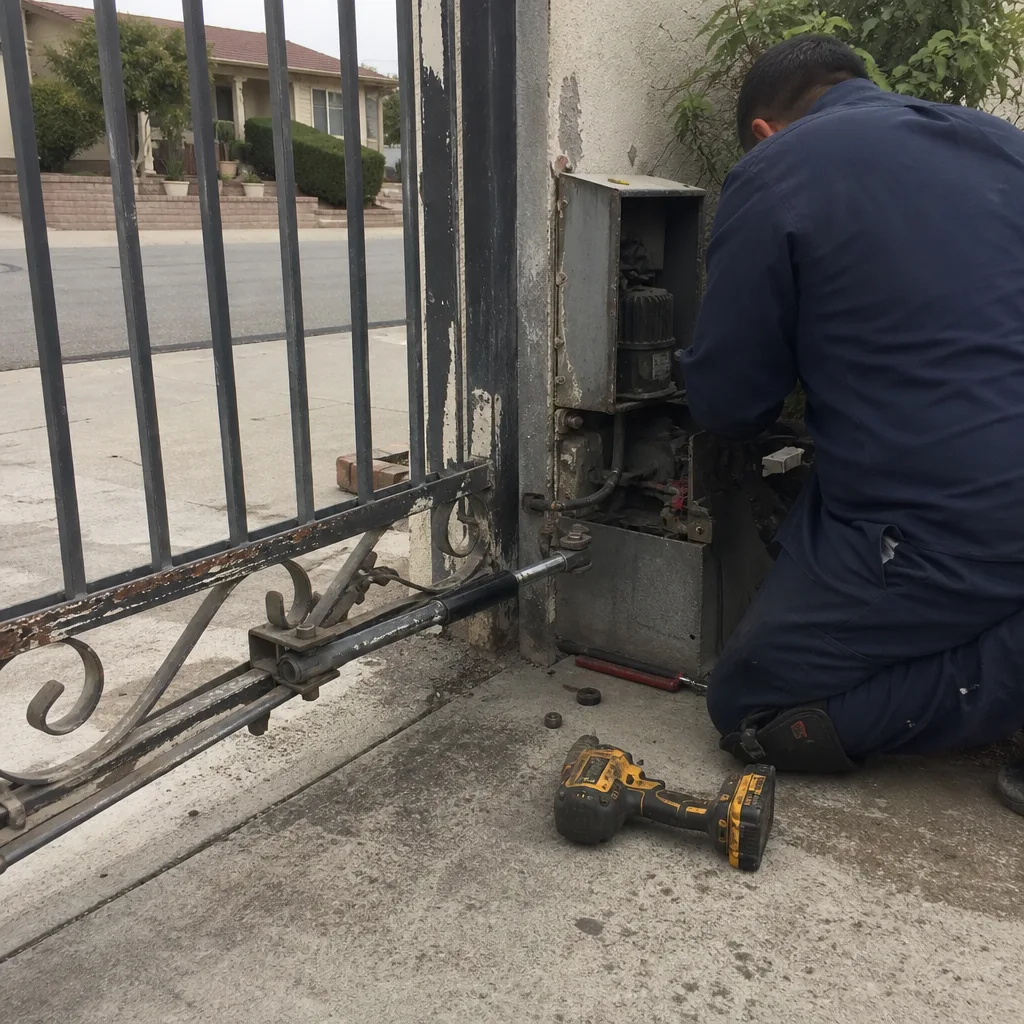
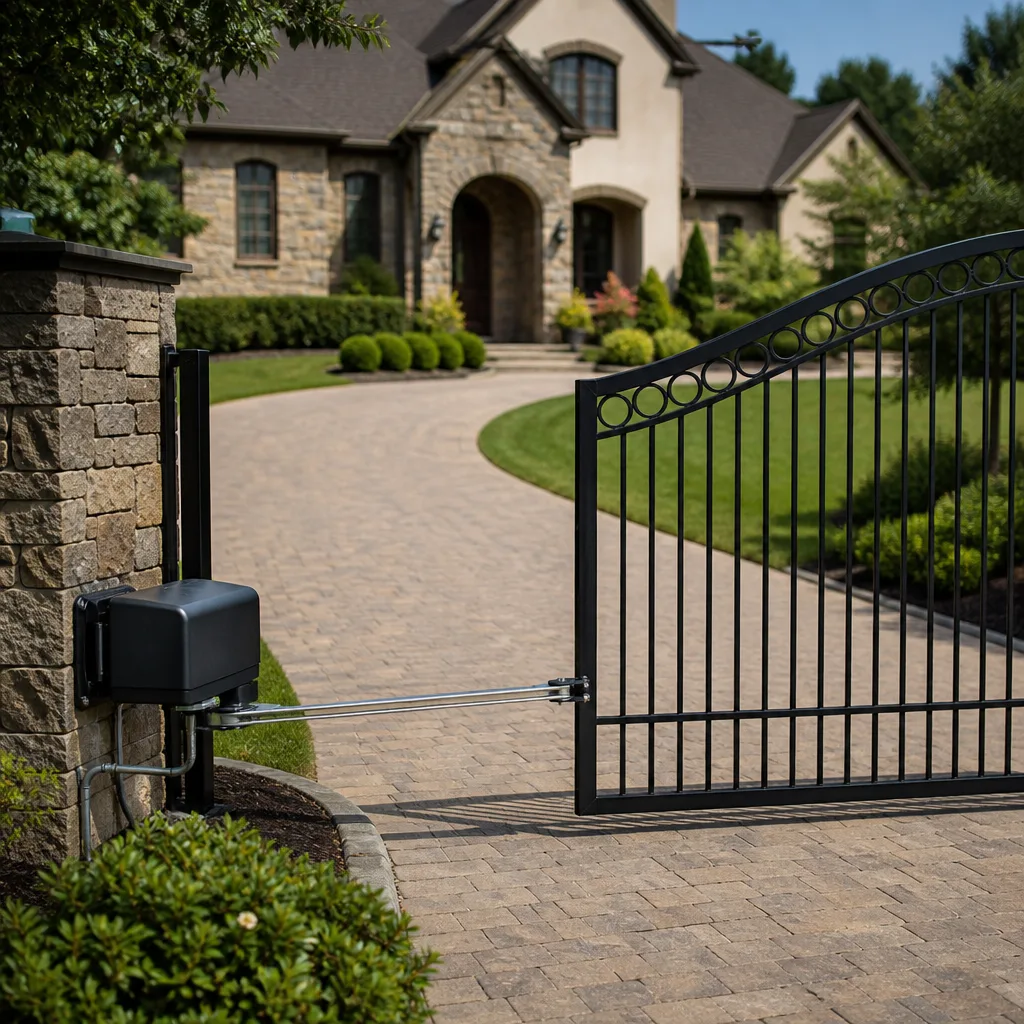 LiftMaster operators
Free on-site gate assessment - hinges, posts, and your LiftMaster or Nice gate operator checked before anything is quoted
The assessment is free and the quote is the invoice.
Get your free estimateGate Repair Emergency Preparedness Guide for Pomona Homes
At 6 AM on a Tuesday, when your automatic gate refuses to open, you have roughly two minutes to decide: call out of work or leave your driveway unsecured and hope for the best. Most Pomona homeowners make that call with zero preparation, and the decision costs them either a day’s pay or a vulnerable property. Our Gate Repair guide changes that. We’ll walk you through exactly what to do when your gate fails, how to operate common gate openers manually when the power is out, what to keep in a gate emergency kit, and how to avoid getting overcharged by repair companies. By the time you finish reading, you’ll have a response plan that gets your gate functional in hours instead of days.
Styles & brands we work with
- Wrought iron
- Wood & steel frame
- Farm & ranch
- Sliding driveway gates
- LiftMaster operators
Quick Answer
Emergency gate repair in Pomona means having a pre-built response plan: know your manual release procedure, keep basic securing hardware on hand, and have a specialist’s number stored offline. Most gate failures fall into predictable categories, power loss, blown fuses, sensor obstruction, or mechanical wear, and a homeowner who can identify which one is happening cuts diagnostic time dramatically – something our Gate Repair Maintenance Checklist for Pomona Homeowners can help you prepare for. Read the five preparation steps below and you’ll be ready when the gate stops moving.
Table of Contents
- Why Gates Fail at the Worst Possible Times
- How to Operate Manual Release on Five Common Opener Brands
- How to Secure an Open or Inoperable Gate While Waiting for Help
- What to Tell the Emergency Gate Technician When You Call
- Build a Gate Emergency Kit for Your Pomona Home
- How to Evaluate After-Hours Emergency Service Quotes Without Getting Gouged
- How Pomona’s Climate and Geography Affect Gate Reliability
- Common Mistakes to Avoid
- When to Call a Professional
- Frequently Asked Questions
- The Bottom Line
Why Gates Fail at the Worst Possible Times
Gate failures cluster around specific events, and none of them are random. In our experience across Pomona neighborhoods from Phillips Ranch to Lincoln Park, the most common trigger is a Southern California Edison power fluctuation or outage. Automatic gate openers rely on a control board that’s sensitive to voltage irregularities. When power flickers during a Santa Ana wind event or a summer brownout, the board can reset, lock up, or blow its internal fuse.
The second most common trigger is mechanical wear that finally reaches a breaking point. Gate hinges on older Pomona properties, especially those with original 1970s and 1980s wrought iron, accumulate rust and stress for years. One morning, the gate simply won’t move because a hinge pin has seized or a weld has cracked. You didn’t do anything wrong, it was always going to happen at some point. The question is whether you recognized the warning signs in the weeks prior: sluggish movement, new grinding sounds, or a gate that listed slightly to one side.
Third comes sensor obstruction. Photoelectric safety sensors at the base of the gate get dusty, weedy, or misaligned. Sprinkler overspray in Pomona’s drier months cakes dirt onto sensor lenses. A single blocked beam tells the opener that something is in the path, so the gate refuses to close, or refuses to open if the safety circuit is wired in a fail-safe configuration. This is the easiest failure to fix yourself, and we cover it in the diagnostic section below.
Here’s the counterintuitive insight most Pomona homeowners discover too late: gates rarely fail at convenient times because the convenient times are when you’re using them. You’re at work, running errands, picking up kids. The failure happens when the gate sits idle and environmental stress, overnight dew, a wind gust, a power dip, lands on it. Preparation is about recognizing that your gate is most vulnerable exactly when you’re not watching it.
How to Operate Manual Release on Five Common Opener Brands
The manual release is the first thing you need when the power fails or the opener locks up and you need to get a car in or out. The instruction manual for your opener is almost certainly not where you can find it at midnight, so we’ve documented the release procedure for the brands we service most often in Pomona. All of these procedures are safe to perform without a technician. None require tools beyond what’s already attached to the opener.
- LiftMaster: Look for a red or yellow plastic handle hanging from a cord attached to the gate operator’s carriage or rail assembly. Pull straight down firmly. This disengages the motor from the gate leaf. You’ll hear a click. The gate now moves freely by hand. To re-engage, run the operator once and it typically re-latches automatically, or pull the release handle again while pushing the gate slightly.
- FAAC: FAAC operators, common on Italian-designed gates found throughout Pomona’s older established neighborhoods, use a keyed manual release on the side of the operator housing. Insert the key, turn it 90 degrees, and the internal locking mechanism disengages. The gate can now be pushed open manually. Turn the key back when power returns before attempting electric operation.
- BFT: BFT openers often have a release lever on the bottom edge of the operator arm. Reach under the housing and feel for a small metal tab. Press it toward the operator body while pushing the gate leaf slightly. The lever releases and the arm swings free. To restore, reset the lever to its original position and run an opening cycle.
- Linear: Linear operators in Pomona, frequently seen on slide gates in larger properties and equestrian-zoned areas like Ganesha Hills, use a pull-chain or pull-cord release mounted near the motor. Pull the chain until you feel a distinct release. Slide the gate open by hand. Linear slide gates can be heavy, so brace yourself and use proper footing.
- Viking: Viking residential swing operators have a manual release knob or handle on the top of the operator. Turn it counterclockwise until the threaded shaft disengages from the drive. The gate leaf moves freely. Re-engage by turning clockwise while wiggling the gate slightly until the threads catch.
A safety note on manual operation: a swing gate that’s been freed from its operator can swing suddenly if the wind catches it or if it’s on a slight grade. Many Pomona driveways slope noticeably from the foothills down toward the valley floor. Stand behind the gate leaf, not in its path, and use two hands. If the gate is exceptionally heavy or on a steep slope, wait for a professional rather than fighting it alone.
How to Secure an Open or Inoperable Gate While Waiting for Help
An automatic gate stuck in the open position is a security problem, and an inoperable one that won’t open is an access problem. Both need temporary solutions while you wait for Gate Repair in Pomona to arrive. Here’s what you can do with hardware from any Pomona hardware store or even what’s already in your garage.
For a gate stuck open, the priority is preventing unwanted entry. A heavy-duty ratchet strap with a minimum 500-pound working load limit can hold a swing gate closed against its post. Run the strap through the gate’s vertical bars near the latch point, wrap it around the post, and ratchet it tight. For a slide gate, use a pipe clamp or C-clamp on the track just in front of the gate wheel to prevent rolling. If the gate has a chain-link design, a length of 3/8-inch steel chain and a padlock works as a temporary latch.
For a gate that won’t open and must be opened, the manual release procedures above are your first move. Once open, secure it in the open position to prevent it from swinging closed and damaging a car or trapping someone. A wedge under the gate leaf, or a strap run to a solid anchor point like a fence post or a parked vehicle’s tow hook, holds it in place. Never use a person to hold the gate open while moving vehicles through, gates can move unexpectedly, and a swinging 400-pound gate leaf is not something anyone should catch with their body.
If the gate is inoperable and can’t be moved manually, your access is blocked and you need Electric Gate Repair in Pomona to restore function. Don’t attempt to force a gate that resists manual movement. The resistance usually means the gearbox has seized, the chain has jumped, or something is mechanically binding. Forcing it damages the operator further and can injure you.
What to Tell the Emergency Gate Technician When You Call
The five pieces of information below cut diagnostic time significantly. When you call a gate specialist, having these ready means the technician arrives with the right parts on the truck instead of diagnosing on-site and making a second trip. In our dispatch experience, a homeowner who provides all five gets their gate back in service meaningfully faster than one who says only “my gate won’t open.”
- The exact symptom in plain language. Did the gate not open at all, open halfway and stop, open but not close, make a clicking sound, make a humming sound, or make no sound? Each points to a different subsystem. A hum with no movement usually means a seized gearbox or bad capacitor. A click with no movement often means a dead battery or failed control board. No sound at all suggests power loss or a blown fuse.
- The opener brand and approximate age. Most Pomona gates have one of nine major brands: LiftMaster, FAAC, BFT, Linear, Viking, Ghost Controls, DoorKing, Elite, or Mighty Mule. The brand name is typically on the operator housing or on a sticker inside the control box. If you can’t read the sticker, take a photo of the operator with your phone. Brand matters because firmware versions, fault-code meanings, and parts differ dramatically between manufacturers, and a technician who arrives knowing it’s a BFT versus a Linear loads different diagnostic equipment.
- Whether you’ve heard unusual noises recently. A grinding sound in the weeks before failure points to gear wear. A screeching sound points to hinge or roller failure. A thumping sound suggests a bent track or misaligned wheel. Homeowners who mention the noise history save a technician from having to guess between mechanical and electrical causes.
- What happened right before the failure. Was there a power outage? A storm? Did someone hit the gate with a car? Did a gardener or landscaper bump the sensor? A recent power event is the single most informative clue for electrical failures. A recent impact points directly to physical misalignment or gear damage.
- Whether the gate has a battery backup and whether the backup is working. If the gate operates normally on battery but not on line power, the problem is upstream of the operator, meaning your power supply, not the opener itself. If it won’t run on either, the issue is in the opener or the gate mechanism itself.
Providing these five details means the technician can often diagnose the issue over the phone and tell you what to expect before the truck even rolls. That’s the difference between a one-trip fix and a frustrating two-visit repair.
Build a Gate Emergency Kit for Your Pomona Home
A gate emergency kit is a small collection of parts and information stored near the gate or in a known garage location. It costs under $50 to assemble and saves hundreds on emergency callouts because it lets you both diagnose problems accurately and perform basic fixes without a technician. Here’s what we recommend for Pomona homeowners, based on the failures we see repeatedly.
Essential kit contents:
- Spare fuses. Most gate openers use either a 3-amp, 5-amp, or 10-amp glass or blade fuse inside the control board. Check your opener’s manual for the correct rating, buy a five-pack of the correct type, and store them in a labeled zip-top bag. A blown fuse is the single most common electrical failure we see, and a homeowner with a spare fuse on hand can often restore function in five minutes.
- Battery backup information. If your opener has a battery backup, note the battery type, voltage, and the date it was last replaced. Most gate backup batteries last two to three years. If your battery is older than that and the gate fails during a power outage, the battery is the prime suspect. Write this information on a small card and tape it inside the control box.
- Manual release instructions. Print the manual release procedure from the section above for your specific brand, laminate it, and keep it in the kit. At midnight, you don’t want to be searching for a PDF on your phone.
- The technician’s number written down. Phone batteries die. Phones get left inside when you’re locked out. A card with Gate Repair Pomona home contact information, stored in the kit and also in your glove box, means you can call from a neighbor’s phone if necessary.
- A basic securing strap. A ratchet strap rated for at least 500 pounds costs under $15 at any Pomona hardware store and lets you secure an open gate immediately.
- Sensor-cleaning supplies. A small spray bottle of glass cleaner and a microfiber cloth. Dirty sensors are a top cause of “gate won’t close” calls, and a 30-second cleaning fixes many of them.
The kit solves two problems at once. It gives you the physical tools to handle minor issues, and it gives you the information to describe major issues accurately to a technician. Both save you money and time.
How to Evaluate After-Hours Emergency Service Quotes Without Getting Gouged
Emergency gate repair pricing in Pomona varies widely, and that is where homeowners get taken advantage of. When your gate fails at 9 PM and a company answers the phone, you’re in a vulnerable position. The gate company knows it. Here’s how to evaluate whether a quote is fair or whether you’re paying a desperation premium.
First, understand the legitimate cost structure. A service call in Pomona typically includes a dispatch fee, often $75 to $150 just to roll the truck, plus hourly labor for the actual repair, typically $100 to $200 per hour, plus parts. A simple fuse replacement or sensor cleaning should cost $150 to $300 total including the dispatch fee. A control board replacement might run $400 to $800 depending on the brand and board complexity. A full operator replacement can exceed $1,500. These are the ranges you should expect for residential gate work.
Red flags that indicate gouging:
- An open-ended quote without a ceiling. Any legitimately structured quote should have a maximum not-to-exceed figure before the technician starts work. If a company won’t give you a ceiling, they’re setting up for a surprise invoice.
- Pressure to replace rather than repair. A company that tells you a $200 sensor cleaning requires a $1,800 new operator without explaining exactly why is selling, not diagnosing. A repair-first specialist, the approach we take, explains what’s actually wrong and what repair would cost before recommending replacement.
- A technician who won’t explain the diagnosis in terms you understand. If they can’t tell you what failed, why it failed, and what the fix is, in a way you can follow, that’s a competency problem.
- Quotes given before the gate has even been inspected. A phone quote for “probably the control board” without looking at the gate is a guess, and an expensive one if the guess is wrong.
- Ignoring warning signs for weeks. A gate that moves slower than it used to, makes new noises, or hesitates before starting is failing in slow motion. Addressing these signs early, when the repair is simple and cheap, beats waiting for the complete failure that strands you at 6 AM.
- Forcing a gate that won’t move. When the motor is running but the gate isn’t moving, something is mechanically bound. Pushing or pulling on the gate while the motor strains damages the gearbox. Stop and call a specialist.
- Leaving the manual release disengaged permanently. After a power outage, some homeowners disengage the motor and leave it that way. The gate then operates as a manual gate with no automation, which creates its own safety issues and leaves the opener vulnerable to damage when the motor tries to run against a released gate.
- Accepting the first quote without comparison. The first company to answer the phone at 10 PM is not automatically the best or the most fairly priced. A five-minute call to a second company can save $300 or more.
- Failing to test the gate after power returns. After any power outage, run a full open and close cycle and watch for irregular movement. Some electrical damage from a surge doesn’t show up until the gate operates under load.
- Storing gate information only in digital form. A printed card with the opener brand, fuse rating, and specialist phone number in the gate kit is worth more at midnight than a phone with a dead battery.
- Attempting electrical repairs without disconnecting power. Opening a control box with live power and poking at terminals is dangerous. Any electrical work beyond a fuse swap should be left to a professional, and even a fuse swap should be done with the power disconnected at the breaker or service switch first.
The most important safeguard is simple: get a written estimate before authorizing any work, and confirm that the final invoice won’t exceed that estimate without a call to you first. A reputable Pomona gate specialist always quotes and agrees on the price before any work starts. If a company is uncomfortable with that, hang up and call the next one.
How Pomona’s Climate and Geography Affect Gate Reliability
Pomona sits in the Pomona Valley, where hot, dry summers and cool, sometimes damp winters create specific stress patterns on gate hardware. Understanding these helps you anticipate failures before they strand you.
Summer heat is the biggest factor. Temperatures in Pomona regularly exceed 95 degrees Fahrenheit during July and August, and the interior of a metal control box can reach 130 degrees or more. Heat kills electronics prematurely, especially capacitors on control boards and batteries in backup systems. A battery that might last three years in a coastal climate often fails in two to two and a half years in Pomona’s inland heat. If your gate opener is more than five years old and has original capacitors, a hot-weather failure is a question of when, not if.
The Santa Ana winds are another Pomona-specific stressor. Wind speeds during Santa Ana events can exceed 50 miles per hour, enough to push a swing gate hard against its stops, flex the hinges, and eventually crack welds or bend the gate leaf itself. After a significant wind event, walk your gate and look for new misalignment. A gate that previously closed smoothly but now catches or bangs is telling you something shifted.
Dust is the third factor. Pomona’s dry climate and proximity to open land in areas near the 57 and 71 freeways means fine dust settles on gate tracks, hinges, and sensors. Slide gates in particular suffer from track contamination, which causes the gate to bind or the motor to overload. A quarterly cleaning of the track and a shot of appropriate lubricant on the rollers extends the life of any slide gate motor.
If you’re building a new gate or replacing an operator, these conditions argue for choosing hardware rated for inland heat and dusty conditions. A specialist who knows Pomona’s climate will spec a unit with a higher temperature rating and a sealed control board rather than the cheapest option on the shelf. That’s the kind of decision that separates a gate that lasts 15 years from one that fails in five. For new installations or replacement, Gate Installation in Pomona takes these local conditions into account from the start.
Common Mistakes to Avoid
When to Call a Professional
Some gate issues are DIY-friendly, and some are not. You can safely clean a sensor, reset a tripped breaker, run a manual release, and replace a blown fuse. You should not attempt gearbox repair, control board replacement, motor replacement, chain or belt replacement, welding, or any repair involving live electrical connections. If the gate has come off its track, if the hinges have failed, or if the operator makes a grinding sound, stop and call a specialist rather than making the problem bigger, and be sure you understand Gate Repair Permits, Codes & Inspections in CA: What You Need to Know before starting major work.
Gate Repair Pomona offers free estimates in Pomona, call (855) 382-5690. We diagnose the issue, explain the fix in plain terms, and quote the price before any work begins. No open-ended invoices, no replacement pressure when a repair does the job.
Frequently Asked Questions
Emergency gate repair in Pomona typically runs $150 to $300 for simple fixes like fuse replacement or sensor cleaning, including the dispatch fee. More involved repairs, like control board replacement, range from $400 to $800 depending on brand and board type, while full operator replacement can exceed $1,500. Always request a not-to-exceed quote before authorizing work, and confirm the final price won’t surprise you when the invoice arrives.
Yes, most gate failures can be diagnosed and repaired the same day, especially common issues like blown fuses, sensor misalignment, and battery failures. Our schedule prioritizes emergency calls because we know an inoperable gate leaves your property unsecured. Call (855) 382-5690 and tell the dispatcher the five diagnostic details from this guide and we’ll get a technician out with the right parts on the truck.
First, use the manual release procedure for your specific opener brand, covered in detail in the section above. If your opener has a battery backup and it’s working, the gate should operate normally on backup power. If the backup is dead and the power is out, the manual release is your only option for moving the gate. Once you’re through, secure the gate with a strap or chain until power returns.
In Pomona’s inland heat, a quality automatic gate opener with proper maintenance typically lasts 10 to 15 years. Electronics like capacitors and batteries often fail first, usually around the three to five year mark, before the mechanical components wear out. If your opener is older than ten years and showing intermittent problems, replacement may be more cost-effective than repeated repairs, but get a diagnostic first.
We service nine major brands, LiftMaster, FAAC, BFT, Linear, Viking, Ghost Controls, DoorKing, Elite, and Mighty Mule, and each has strengths in specific applications. LiftMaster and Linear are strong choices for slide gates, while FAAC and BFT dominate high-end swing gate installations. Ghost Controls is popular for DIY-friendly residential setups. A gate specialist who works across all of them can recommend the right fit for your specific access pattern and site conditions, rather than pushing the one brand they happen to stock.
You can, but you shouldn’t unless you’re comfortable with electrical work, concrete anchoring, and safety sensor calibration. Improperly installed operators create safety hazards, especially for children and pets, and can damage the gate mechanism. A professional installation includes the power run, safety edges, and proper force settings, and it’s typically warrantied. The cost of doing it right the first time is lower than fixing a botched DIY job later.
The Bottom Line
A gate failure doesn’t have to be a crisis. Pomona homeowners who know their manual release procedure, keep a small emergency kit, and have a specialist’s number stored offline are positioned to handle the problem in minutes, not hours. Write down your opener brand, note your fuse rating, and practice the manual release once before you need it. When the gate fails, don’t force it, don’t accept an open-ended quote, and don’t work on live electrical connections. Call a specialist who can diagnose the issue accurately and quote the price before the work starts. That preparation is the difference between a bad morning and a minor inconvenience, and you can find more guides & resources on our blog to stay ready.
Written by the team at Gate Repair Pomona, serving Pomona since 2014.
See the difference
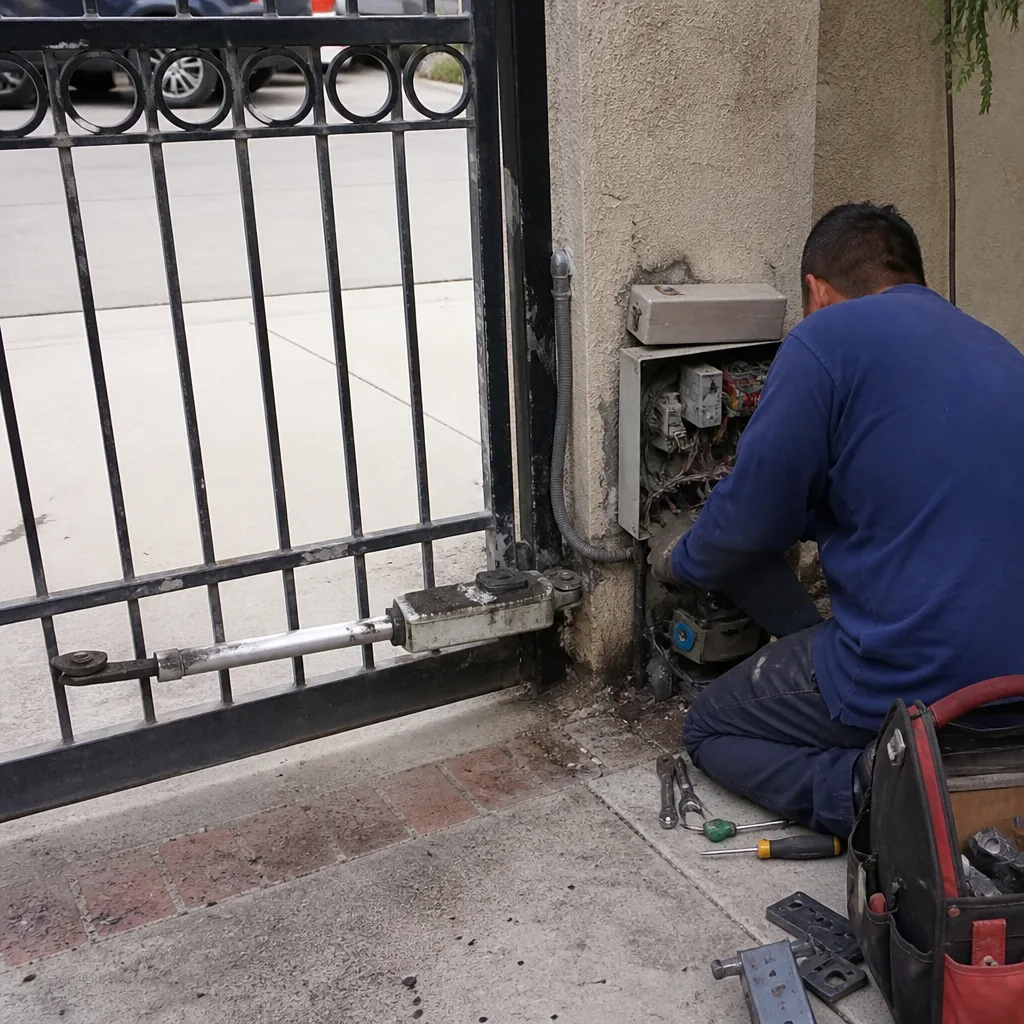 Before
 After
 Before
 After
 Before
 After