
Last updated November 3, 2026
 Wrought iron
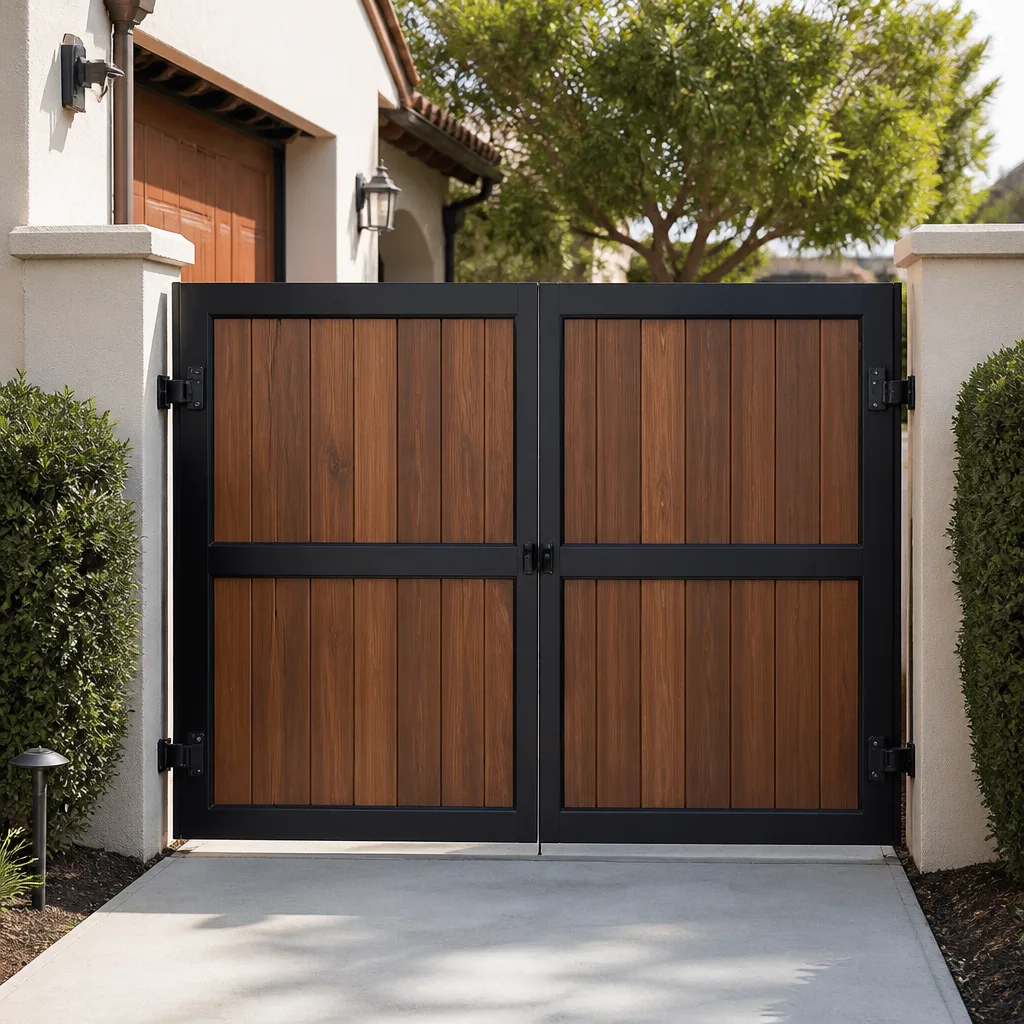 Wood & steel frame
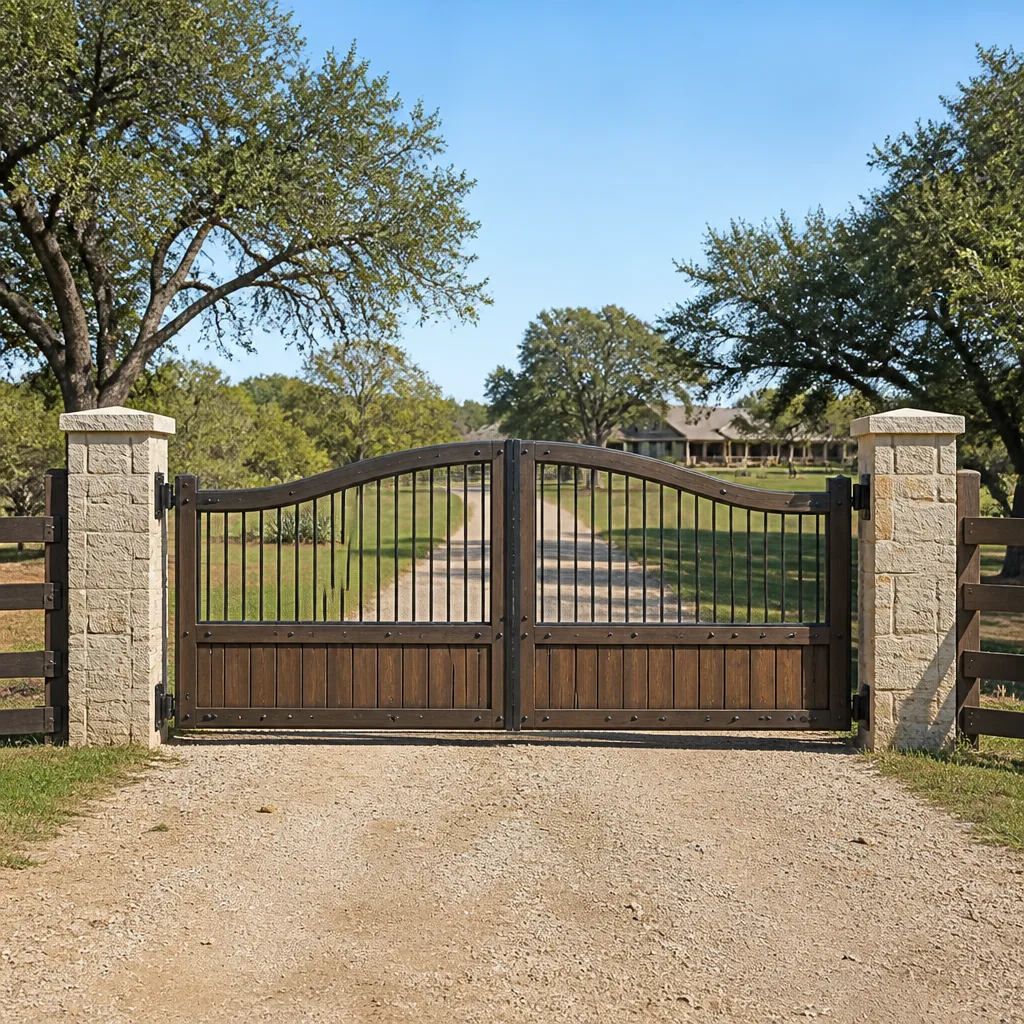 Farm & ranch
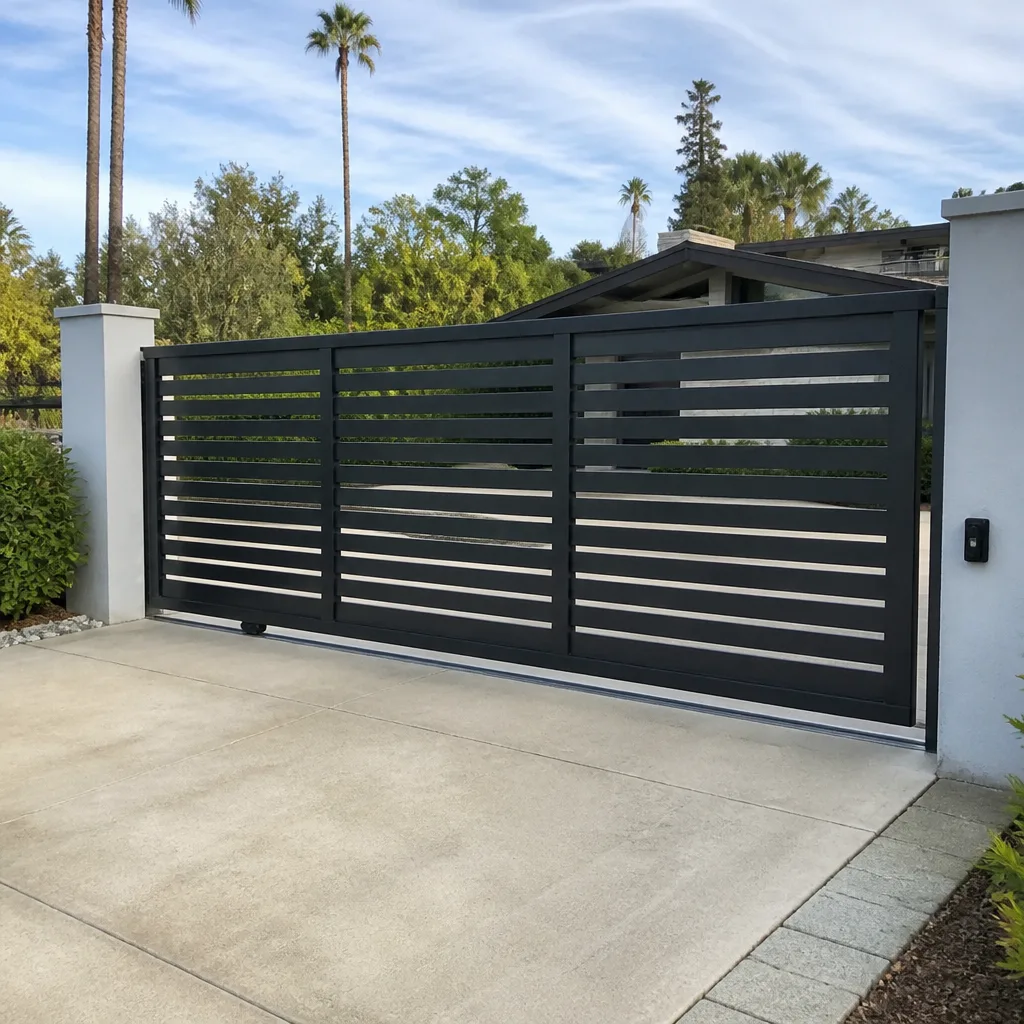 Sliding driveway gates
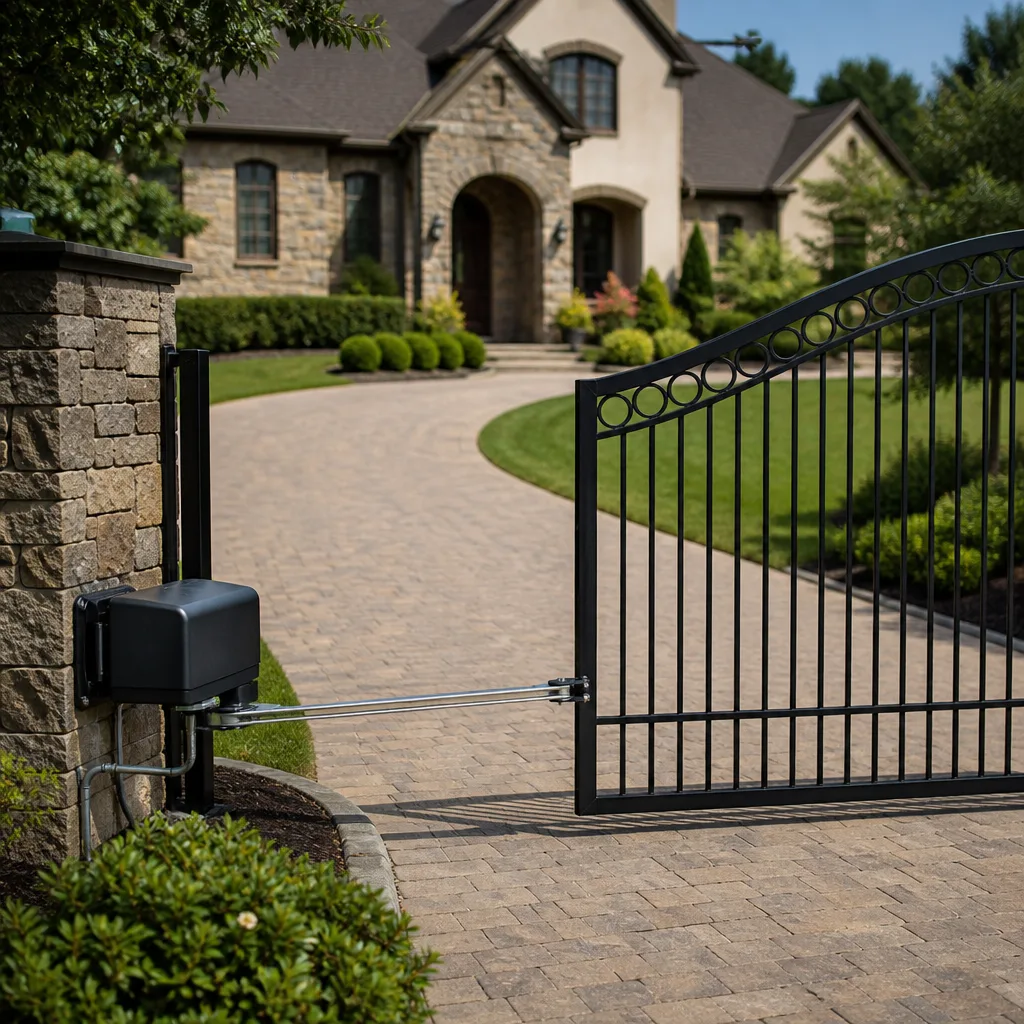 LiftMaster operators
Free on-site gate assessment - hinges, posts, and your LiftMaster or Nice gate operator checked before anything is quoted
The assessment is free and the quote is the invoice.
Get your free estimateThe Complete Gate Repair Guide for Pomona Homeowners
Pomona sits on some of the most reactive clay soil in Los Angeles County. That soil expands and contracts with every wet winter and dry summer, shifting enough seasonally to throw a gate’s hinge alignment off by a quarter-inch. A quarter-inch doesn’t sound like much until you understand that it’s enough to make a 300-pound steel gate drag, bind, and eventually grind an electric motor to death. Our Gate Repair team maps every major gate failure type to the specific Pomona conditions that cause it, so you know what you’re actually dealing with before calling anyone. We’ll cover the soil problem, the Santa Ana wind factor, the hard-water issue, and the exact symptoms that tell you whether you’re looking at a $40 fix or a full operator replacement.
Quick Answer
Gate repair in Pomona is driven by three local conditions most national guides ignore: expansive clay soil that shifts posts and throws off hinge alignment, Santa Ana winds that damage swing-gate arms and operators, and hard San Gabriel Valley water that builds mineral scale on rollers and hinges. Most manual gate repairs run between $150 and $400, while electric gate repairs typically range from $250 to $900 depending on whether the issue is a sensor, a control board, or a motor. If your gate is grinding, leaning, or refusing to open, the cause is almost always one of these three Pomona-specific factors, and identifying which one saves you from paying for a repair that doesn’t address the root problem. For a deeper look at local pricing and causes, see The Complete Guide to Gate Repair in Pomona.
Styles & brands we work with
- Wrought iron
- Wood & steel frame
- Farm & ranch
- Sliding driveway gates
- LiftMaster operators
Table of Contents
- How Pomona’s Clay Soil Destroys Gate Alignment
- Santa Ana Wind Damage: What to Inspect After Every Wind Event
- Hard Water Mineral Scale: The Slow Gate Killer
- DIY vs. Professional: A Pomona Decision Tree
- Brand-Specific Symptoms: LiftMaster, Linear, and FAAC in Pomona
- Repair or Replace? A Pomona Homeowner’s Framework
- Preventive Maintenance for Pomona Gates
- Common Mistakes to Avoid
- When to Call a Professional
- Frequently Asked Questions
How Pomona’s Clay Soil Destroys Gate Alignment
Pomona’s soil is classified as expansive clay, specifically within the Diablo-Linne soil series that dominates the Pomona Valley. This soil can swell by up to 10% in volume when saturated and shrink by the same amount when it dries out. For a gate post set in concrete, that seasonal movement translates to lateral pressure that slowly pushes posts out of plumb. We’ve seen gates in Phillips Ranch and West Pomona where posts have moved a full inch out of alignment over five years, and the homeowner never noticed until the gate started scraping concrete or the motor began laboring.
The mechanical chain reaction works like this: when a post leans, the hinge line shifts. The gate no longer hangs true, so its weight distribution changes. The latch side drops. The gate starts dragging on the ground or catching on the catch post. If it’s an electric gate, the motor now has to work against friction it wasn’t designed to handle. The control board compensates by drawing more current, which overheats the board over time and shortens motor life dramatically.
How to Spot Post Lean Before the Motor Fails
- Check the gap at the latch side. Walk to the closed gate and look at the vertical gap between the gate and the catch post. If it’s wider at the top than the bottom, or vice versa, the post has moved.
- Look for fresh concrete cracks. Post footings in Pomona clay often develop hairline cracks radiating outward from the post base. These cracks are the soil pushing against the footing.
- Open the gate halfway and let go. A gate with aligned hinges should stay put. If it swings open or closed on its own, the hinge line is off and gravity is doing the work.
- Listen for scraping. A gate that scrapes the ground in one spot but not another is dealing with either a folded wheel track or a post that’s leaning and causing uneven clearance.
The fix for post lean depends on severity. Minor lean can sometimes be corrected by adjusting hinges or adding shims. Significant lean means the post needs to be pulled, the footing re-poured deeper (ideally below the active clay zone, typically 24 to 30 inches in Pomona), and the post reset. This is one of the most common repairs we perform across Pomona, and it’s also the one most often misdiagnosed as a “motor problem” or “sensor problem” by technicians who don’t work in clay soil regions.
If you’re seeing any of these symptoms, the team at Gate Repair Pomona home can assess whether your post lean is correctable or requires a footing replacement, before it takes out your operator.
Santa Ana Wind Damage: What to Inspect After Every Wind Event
Santa Ana winds blow through the Pomona Valley every fall and winter, regularly gusting to 40 or 50 mph, with the strongest events pushing past 70 mph through the San Jose Hills and the 57 Corridor. For a swing gate, a 50 mph gust against a 6-by-8-foot steel panel generates enough force to bend arms, shear bolts, and strip gears inside operators. We see a predictable spike in swing-gate arm damage every time the Santa Anas kick up, especially in the more exposed neighborhoods up against the foothills.
The most vulnerable components during a wind event are, in order: the operator arm or piston, the hinge bolts, the latch mechanism, and the control board (from power surges caused by wind-driven branches hitting lines). The arm takes the brunt because it’s the connection point between the motor and the gate leaf. When a gust catches the gate, the force transmits directly through the arm into the operator’s gear train.
Post-Wind Inspection Checklist for Pomona Homeowners
- Check the arm for any bend or bow. Even a 5-degree bend changes the geometry enough to cause binding. Run your hand along the arm and look for any deviation from straight.
- Test the manual release. If your operator has a release lever, disengage it and swing the gate by hand. It should move smoothly through the full arc. Any resistance suggests hinge or arm damage.
- Inspect the hinge bolts. Look for any bolt that’s backed out, sheared, or showing bright metal where it’s been working loose. Tighten with a wrench if you can safely reach them.
- Watch one full open-close cycle. Stand back and watch the gate move. Listen for new grinding, squealing, or chattering sounds. Watch for hesitation at any point in the travel.
- Check the safety sensors. Wind can knock photo-eye sensors out of alignment faster than anything else. If your gate starts and then reverses for no reason, misaligned or wind-shifted sensors are the likely culprit.
After a major Santa Ana event, we recommend doing this five-point check even if the gate seems to be working. Damage from wind stress is cumulative, and a bent arm that still works today will fail permanently, usually at the worst possible time. For swing-gate systems in Pomona, the repair call is often for an operator that was steadily degraded by wind load over several seasons before it finally gave out. If your gate took a hit in the last wind event, Gate Repair in Pomona covers swing-arm replacement, hinge re-alignment, and sensor re-aiming on all major brands.
Hard Water Mineral Scale: The Slow Gate Killer
Pomona’s municipal water comes from a mix of local groundwater and imported water from the Metropolitan Water District, and it consistently tests in the hard to very hard range, typically 200 to 300 parts per million of dissolved minerals. That water doesn’t touch your gate directly, but it does touch everything around it: irrigation overspray, morning condensation that forms on metal surfaces, and the fine mist from sprinklers that drifts onto gate hardware. When that water evaporates, it leaves behind calcium and magnesium deposits that build up on hinges, rollers, tracks, and latch mechanisms.
Mineral scale on gate hardware is a problem specific to the San Gabriel Valley water supply, and it accelerates wear in a predictable way. The white, chalky buildup acts as an abrasive. Every time the gate opens and closes, those mineral crystals grind against the metal surfaces. Rollers that should spin smoothly start to drag. Hinges that should pivot freely start to bind. The comparison we use with homeowners is this: it’s the mechanical equivalent of sandpaper in the joint, applied a little at a time with every cycle.
Signs of Mineral Scale Damage on Your Gate
- White or gray crust on hinge pins. This is the most visible sign. If your hinges look frosted or chalky, scale is present.
- Squealing or grinding during operation. Scale creates friction, and friction creates noise. A gate that didn’t squeak six months ago and squeaks now usually has mineral buildup.
- Stiff manual operation. With the operator disengaged, a healthy gate swings with light pressure. If you’re leaning into it, the hinges or rollers are binding.
- Rollers that don’t spin. On sliding gates, you should be able to reach down and spin each roller by hand. A roller that won’t spin is frozen with scale or has a failed bearing, which scale accelerates.
- Premature latch wear. The latch mechanism catches the gate and holds it closed. When scale builds up inside the latch body, the internal components wear out faster and the latch eventually stops engaging.
The fix for mineral scale is a combination of cleaning and, where the damage is already done, component replacement. Light buildup can be removed with a wire brush and white vinegar, but hinges that are deeply scaled usually need to be replaced, because the pin and bushing surfaces are already worn past tolerance. In Pomona, we recommend an annual hardware cleaning as part of routine maintenance, timed for early fall before the Santa Ana winds start. That way the hardware is clean and moving freely before the wind season adds stress on top of the friction. If your gate is already showing scale-related wear, Electric Gate Repair in Pomona includes hinge, roller, and hardware replacement for both manual and motorized systems.
DIY vs. Professional: A Pomona Decision Tree
Some gate repairs are genuinely doable for a homeowner with basic tools and patience. Others involve high-tension springs, electrical wiring, or control circuitry that falls under California electrical code and should stay in professional hands. See our DIY vs Professional Gate Repair: The Pomona Homeowner’s Decision Guide for help deciding. Here’s a practical decision tree based on what we see in Pomona homes.
Step 1: Identify the Power Source
Is your gate fully manual with no motor, no wiring, and no sensors? Manual gates are generally safer to work on. Is your gate electric, with an operator, control board, sensors, and possibly a keypad or intercom? Electric gates involve line voltage or low-voltage control wiring. In California, any work on the electrical components of a gate operator should be done by someone qualified to work on that equipment. This isn’t a recommendation; it’s how the state’s electrical safety regulations are structured.
Step 2: Categorize the Problem
Safe for DIY (manual gates only):
- Tightening loose hinge bolts or latch screws
- Cleaning mineral scale off hinges and rollers with vinegar and a wire brush
- Lubricating hinges with a silicone-based lubricant (never WD-40, which attracts dust and creates a paste with the mineral deposits)
- Clearing debris from a sliding gate track
- Re-aligning a photo-eye sensor that’s been visibly knocked out of position
Not Safe for DIY (call a professional):
- Any work involving the high-tension springs used on cantilever and some sliding gates. These springs are under enormous load, and they can release catastrophically if removed incorrectly. Serious hand and facial injuries happen every year from gate springs.
- Any repair to operator arms, pistons, or internal operator components. The operator contains gears under load, and the arm is under tension in certain positions.
- Control board replacement or wiring repair. The board interfaces with line voltage, and a wrong connection can damage the board, the motor, or create a fire hazard.
- Post removal or footing replacement. This is heavy work that requires a jackhammer or excavator in most cases, plus knowledge of how deep to go to get below Pomona’s active clay zone.
- Anything involving the gate’s electrical supply line. This is governed by the California Electrical Code and requires proper permitting and inspection in many Pomona neighborhoods.
A good rule of thumb: if the repair involves a tool you’d have to buy specifically for the job, the job is probably beyond DIY range. If you’re unsure which category your problem falls into, call and describe the symptoms before reaching for a wrench.
Brand-Specific Symptoms: LiftMaster, Linear, and FAAC in Pomona
Pomona’s residential gates run on a mix of brands, but three dominate what we see in the field: LiftMaster, Linear, and FAAC. Each has its own failure patterns, and knowing which brand you have tells you a lot about what to expect.
LiftMaster
LiftMaster operators, especially the LA500 series commonly used on Pomona residential swing gates, are workhorses, but they’re sensitive to the exact alignment problem our clay soil creates. When a post leans and the gate starts dragging, the LiftMaster’s obstruction detection kicks in and the gate reverses mid-travel for no apparent reason. The homeowner assumes the sensors are bad, but the real issue is the operator reading the drag as an obstruction. We’ve seen Pomona homeowners replace perfectly good LiftMaster control boards because the underlying hinge misalignment was never addressed. The symptom pattern is: gate starts, moves a few inches, stops, reverses. If you see that, check for post lean before buying a new board.
Linear
Linear operators, common on both swing and slide gates in Pomona’s larger lots, tend to show their age through the capacitors and limit switches. The classic Linear symptom is a gate that opens fine but won’t close, or closes fine but won’t open. This is often a limit switch failing, but in Pomona’s mineral-heavy environment, we also see Linear slide-gate rollers grinding themselves down and taking the chain tension with them. If your Linear gate makes a chattering sound during travel, the chain is likely loose due to roller wear, not a motor problem. Tightening the chain without addressing the worn rollers just transfers the stress to the motor sprocket.
FAAC
FAAC hydraulic operators are smooth and quiet when they’re working, which makes their failure mode more subtle. A FAAC unit that’s low on hydraulic fluid or has a failing pump will move the gate noticeably slower than it did when new, and the homeowner may not notice because the decline is gradual. In Pomona, we also see FAAC systems where the hydraulic release has been left open after a power outage, which causes the gate to free-swing and the wind to take it. If your FAAC gate swings freely by hand after a power event, the manual release is still open and needs to be re-engaged before the system will operate normally.
Mighty Mule and BFT systems also appear in Pomona, though less frequently in the neighborhoods we service most. Mighty Mule units are popular on lighter residential gates and tend to fail on the control board when there’s a power surge, which Santa Ana wind events cause regularly. BFT systems are mechanically robust but have limit-switch configurations that Pomona homeowners sometimes accidentally modify, leaving the gate over-traveling and banging against the stops. We service all nine major gate and operator brands, including LiftMaster, FAAC, BFT, Linear, Viking, Ghost Controls, DoorKing, Elite, and Mighty Mule, so the technician who arrives at your Pomona home already knows your hardware’s specific quirks.
Repair or Replace? A Pomona Homeowner’s Framework
The repair-first philosophy should always come before the replacement conversation. We service whatever brand you already own, and our default position is to fix what’s fixable rather than sell you new equipment. That said, there’s a point where repair stops making financial sense, and understanding where that line is helps you make a clear-headed decision instead of a pressured one.
When Repair Makes Sense
- The operator is less than 8 to 10 years old and the failure is a discrete component: a sensor, a limit switch, a capacitor, a remote receiver
- The gate structure and posts are still sound, and the issue is a single hardware failure like a hinge or a roller
- The control board has failed but the motor and gear train are in good condition
- The total repair cost is under 50% of the cost of a new operator
When Replacement Is the Better Call
- The operator is significantly older, and parts are no longer readily available (common with discontinued models we see in older Pomona neighborhoods like Lincoln Park and Wilton Heights)
- The gate itself has rust-through or structural fatigue, not just surface corrosion
- The motor has seized and the gearbox has failed simultaneously, meaning the core of the operator is gone
- You’ve had three or more separate failures in 18 months, suggesting the system as a whole is in decline
- The current operator doesn’t have the safety features now standard, like monitored photo-eyes and force-reversal, and you want your property up to current code
If replacement becomes necessary, having the same team that’s been repairing your gate handle the new installation means continuity. The tech who diagnosed the old system’s failure points knows exactly what to avoid in the new setup. Gate Installation in Pomona covers new operator installation, full gate replacement, and automation upgrades on whatever brand you choose.
Preventive Maintenance for Pomona Gates
Pomona’s three environmental stressors, clay soil, wind, and hard water, are all manageable with a maintenance schedule that responds to the local calendar. Here’s what we recommend, timed to Pomona’s actual seasons.
Fall: Before Santa Ana Season
- Clean all hardware. Remove mineral scale from hinges, rollers, and latch mechanisms. Use a wire brush and, for stubborn deposits, white vinegar applied with a rag. Rinse and dry thoroughly.
- Lubricate with the right product. Use a silicone-based or lithium-based grease on hinge pins and a silicone spray on rollers. Avoid WD-40 and other penetrating oils as primary lubricants; they strip existing lubrication and leave a film that attracts Pomona’s fine dust.
- Check all bolts and fasteners. Go around the gate and tighten anything that’s backing out. Pay special attention to hinge bolts and operator mounting bolts, which vibrate loose over time.
- Test the full open-close cycle. Watch for any hesitation, scraping, or unusual noise. Address small problems now before wind season multiplies them.
Spring: After the Rainy Season
- Re-check post alignment. The winter rains are when Pomona’s clay soil does most of its swelling. Check the latch-side gap and look for new concrete cracks at the post bases.
- Inspect for rust. Rain plus mineral deposits accelerate corrosion. Look for rust forming at bolt heads, hinge points, and anywhere the powder coat has chipped. Touch up with rust-inhibiting paint where needed.
- Test safety sensors. Wave a hand in front of each photo-eye while the gate is closing. The gate should reverse immediately. If it doesn’t, the sensors need re-aiming or cleaning.
- Lubricate again. The spring cleaning in Pomona should include a second lubrication pass, especially if the winter stripped the fall application.
For electric gates, an annual professional inspection catches the things homeowners can’t see: capacitor degradation, board-level corrosion, motor brush wear, and sensor alignment at the component level. It’s cheaper to replace a $40 capacitor during an inspection than a $400 control board after a surge.
Common Mistakes to Avoid
- Lubricating with WD-40. WD-40 is a penetrating oil and water displacer, not a long-term lubricant. It strips existing grease and leaves a thin film that captures Pomona’s fine dust, creating an abrasive paste on hinges and rollers. Use silicone or lithium grease instead.
- Ignoring post lean because the gate still opens. The operator is compensating for the misalignment until it can’t. By the time the gate stops working, the small hinge problem has become a motor replacement.
- Tightening the chain without checking the rollers. On slide gates, a loose chain is usually a symptom of worn rollers or a stretched chain, not just a tension problem. Tightening it as a standalone fix transfers the stress to the motor sprocket and shortens the operator’s life.
- Skipping sensor re-alignment after Santa Ana events. Wind knocks photo-eyes out of position constantly in Pomona. A misaligned sensor causes the gate to reverse for no visible reason, and too many homeowners replace the board before checking the simpler fix.
- Using an aftermarket part that doesn’t match the operator’s spec. Not all control boards are interchangeable, even within the same brand. Installing a board with the wrong firmware version can brick the operator entirely.
- Attempting spring work without the right tools. Gate springs on cantilever and some slide systems are under high tension. Removing them without a proper spring tool or the right clamping setup can cause a sudden release that seriously injures hands or face. This one is not worth the risk.
- Waiting for total failure before calling. Every symptom described in this guide is a warning sign. Addressing a grinding hinge at $150 beats replacing an overheated operator at $700.
When to Call a Professional
Call a professional when the repair involves electricity, high-tension springs, structural post work, or any symptom you can’t confidently diagnose. If your gate is electric and the problem is inside the operator housing, that’s a professional job under California electrical standards, period. If your gate post is visibly leaning and the concrete is cracked, that’s structural work that requires a new footing, and doing it wrong means doing it again in three years. If you’ve tried the DIY fixes in this guide and the gate still grinds, drags, or reverses unexpectedly, the problem is deeper than hardware cleaning and you need someone who sees these failures every week. For more guides & resources, visit our blog. Gate Repair Pomona offers free estimates in Pomona, call (855) 382-5690 and describe what your gate is doing. We’ll tell you honestly whether it’s a DIY fix, a repair call, or a replacement conversation.
Frequently Asked Questions
Manual gate repairs in Pomona typically cost between $150 and $400, covering things like hinge replacement, latch repair, and roller service. Electric gate repairs run from $250 to $900, depending on whether the issue is a sensor re-alignment, a control board replacement, or a motor rebuild. The price is always quoted and agreed before any work starts, so you won’t get a surprise invoice. Call (855) 382-5690 for an exact quote, estimates are free.
A gate that starts, then reverses mid-travel is usually reading an obstruction that isn’t visibly there. In Pomona, the two most common causes are misaligned photo-eye sensors (often knocked out of position by Santa Ana winds) and hinge misalignment from clay-soil post lean, which creates enough drag to trigger the obstruction detection. Check for post lean and sensor alignment before assuming the control board is bad.
For electric gates in Pomona, we recommend an annual professional inspection, ideally in early fall before Santa Ana wind season begins. Manual gates need a thorough cleaning and lubrication twice a year, also in fall and spring, to manage the mineral scale from Pomona’s hard water and the dust from our dry summers.
For most manual gate repairs and many electric gate issues, yes. Hinge replacement, sensor re-alignment, latch repair, and operator arm replacement are commonly completed the same day we arrive. More involved work, like control board replacement on a brand we need to order parts for, may take a day or two depending on part availability. Call (855) 382-5690 to describe what’s happening and we’ll give you a realistic timeline.
We service LiftMaster, FAAC, BFT, Linear, Viking, Ghost Controls, DoorKing, Elite, and Mighty Mule. Our technicians are factory-familiar with all nine brands, meaning they arrive already knowing your operator’s specific fault codes, quirks, and parts fitment instead of figuring it out on your driveway.
Repair is the right call when the operator is under 10 years old and the failure is in a discrete component like a sensor, limit switch, or capacitor. Replacement makes sense when the motor has failed and the gearbox is worn, when parts are discontinued, or when you’ve had multiple failures in under two years. We lean repair-first because we service whatever you already own, and we only recommend replacement when repair no longer makes economic sense.
The Bottom Line
Gate problems in Pomona are not random. They trace back to three local conditions: expansive clay soil that shifts posts and throws off hinge alignment, Santa Ana winds that stress swing-gate arms and knock sensors out of position, and hard San Gabriel Valley water that builds mineral scale on every moving part. Understanding which of these three is behind your gate’s symptoms tells you whether you’re dealing with a $40 hinge, a $200 sensor re-alignment, or a bigger structural issue. Check your posts after the rainy season, inspect your arms after every wind event, and clean your hardware twice a year against the scale. When you need help, call a specialist who knows Pomona’s conditions and the brands you own, not a generalist who has to learn both on the job.
Written by the team at Gate Repair Pomona, serving Pomona since 2014.
See the difference
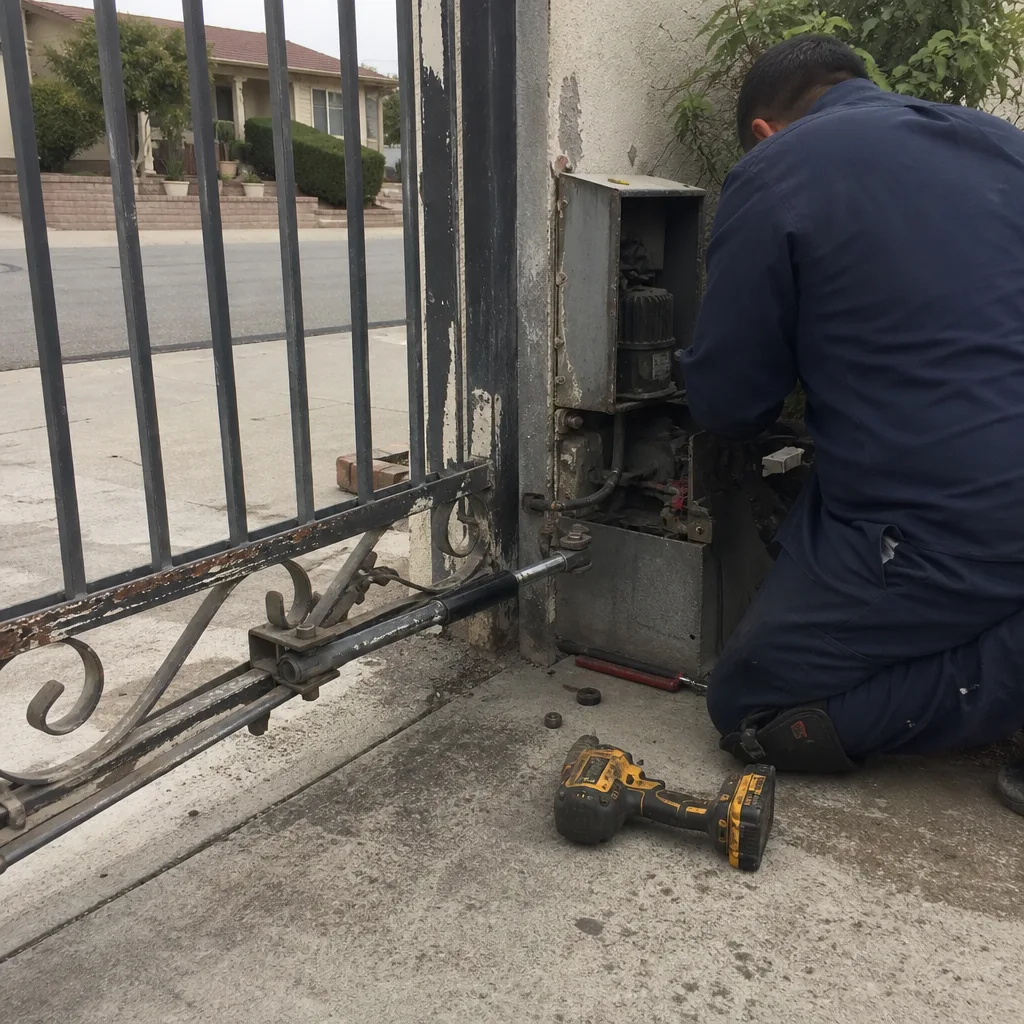
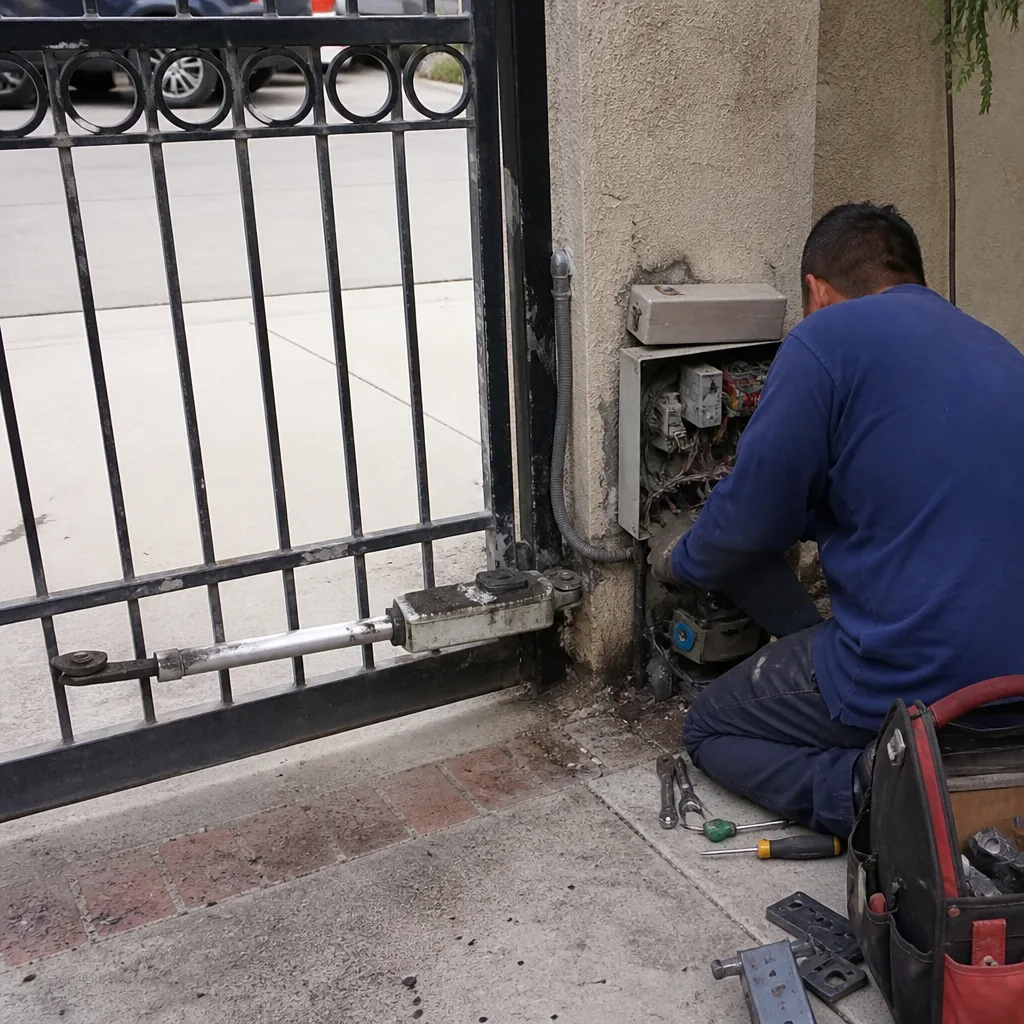 Before
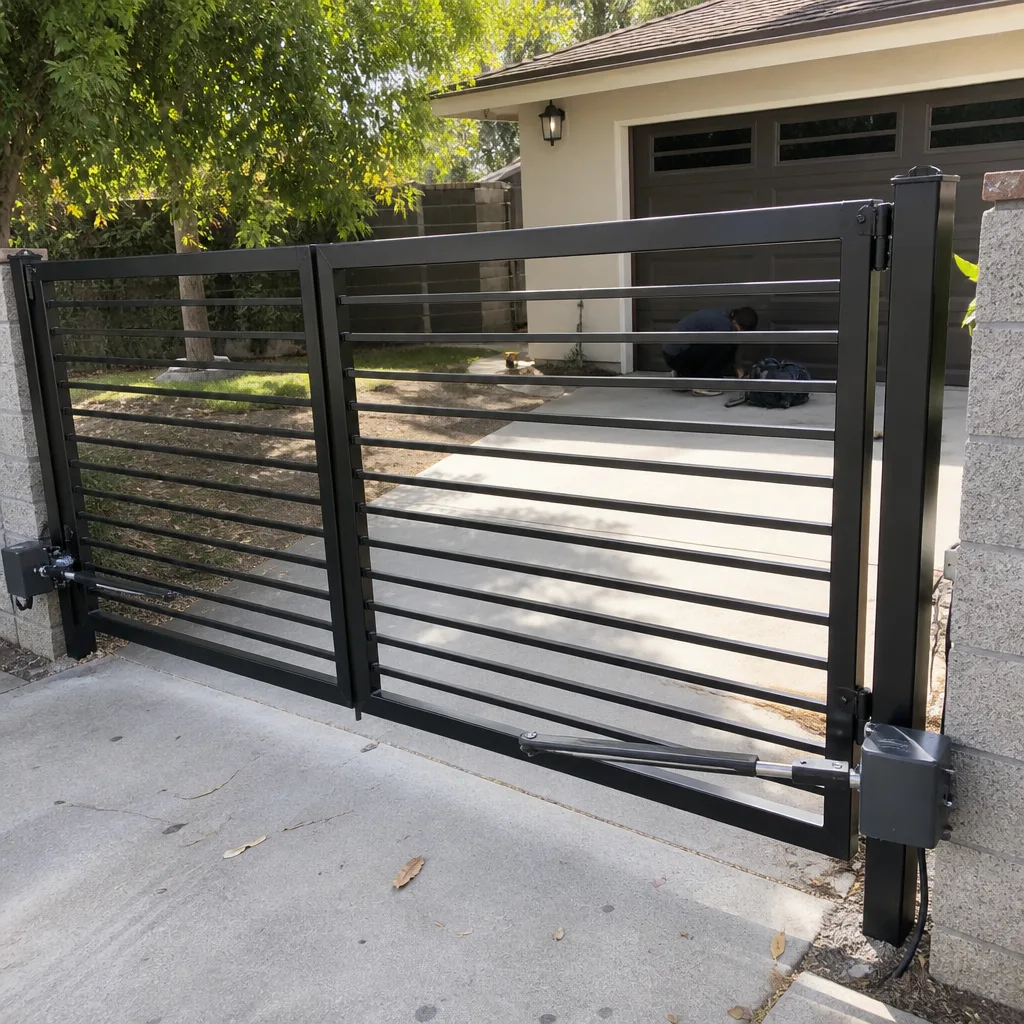
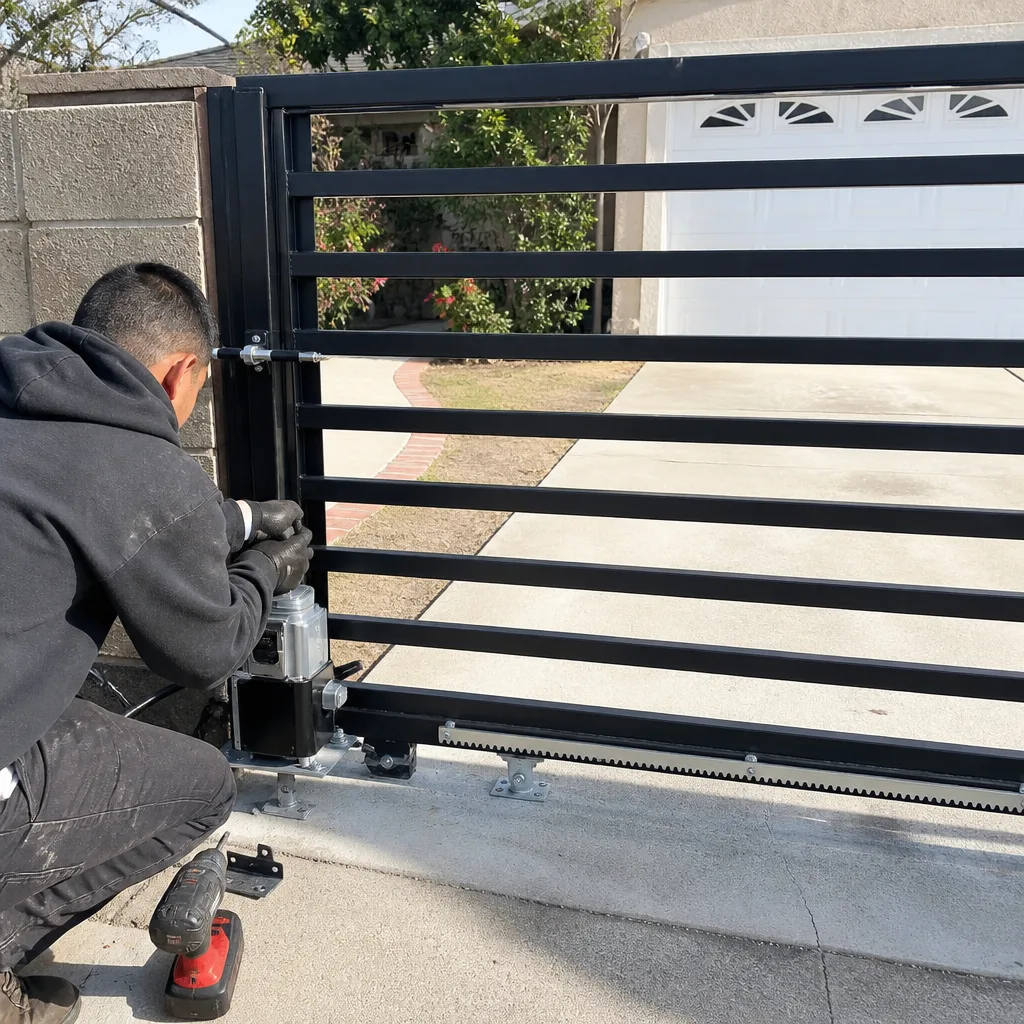 After
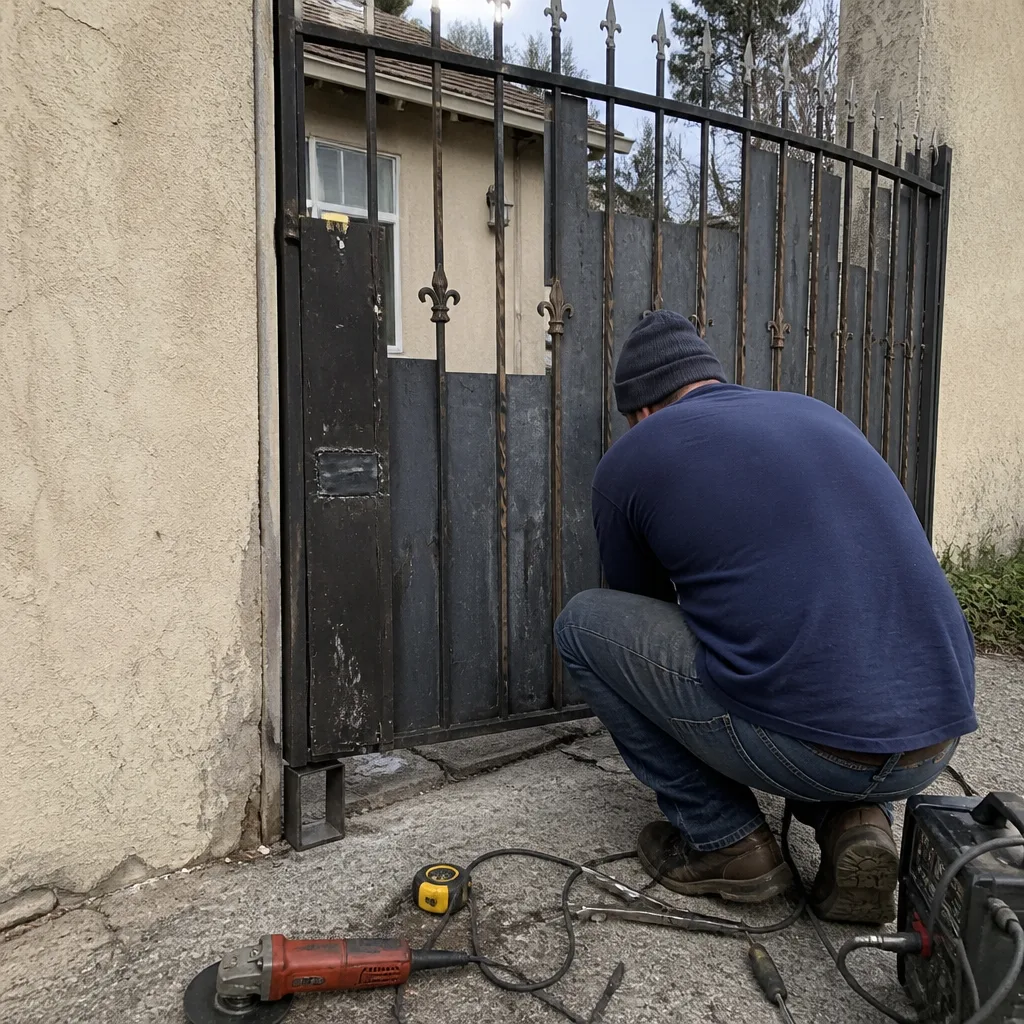 Before
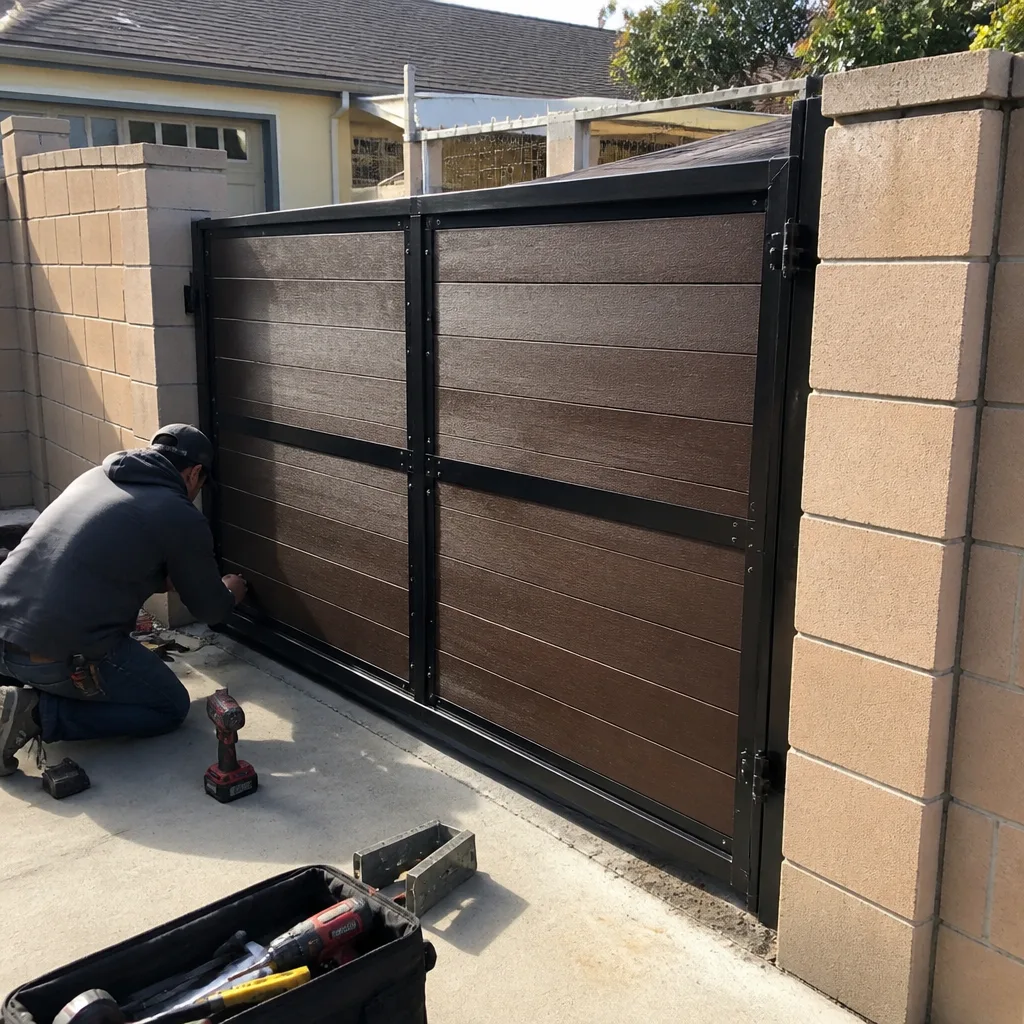 After
 Before
 After