
Last updated November 2, 2026
 Wrought iron
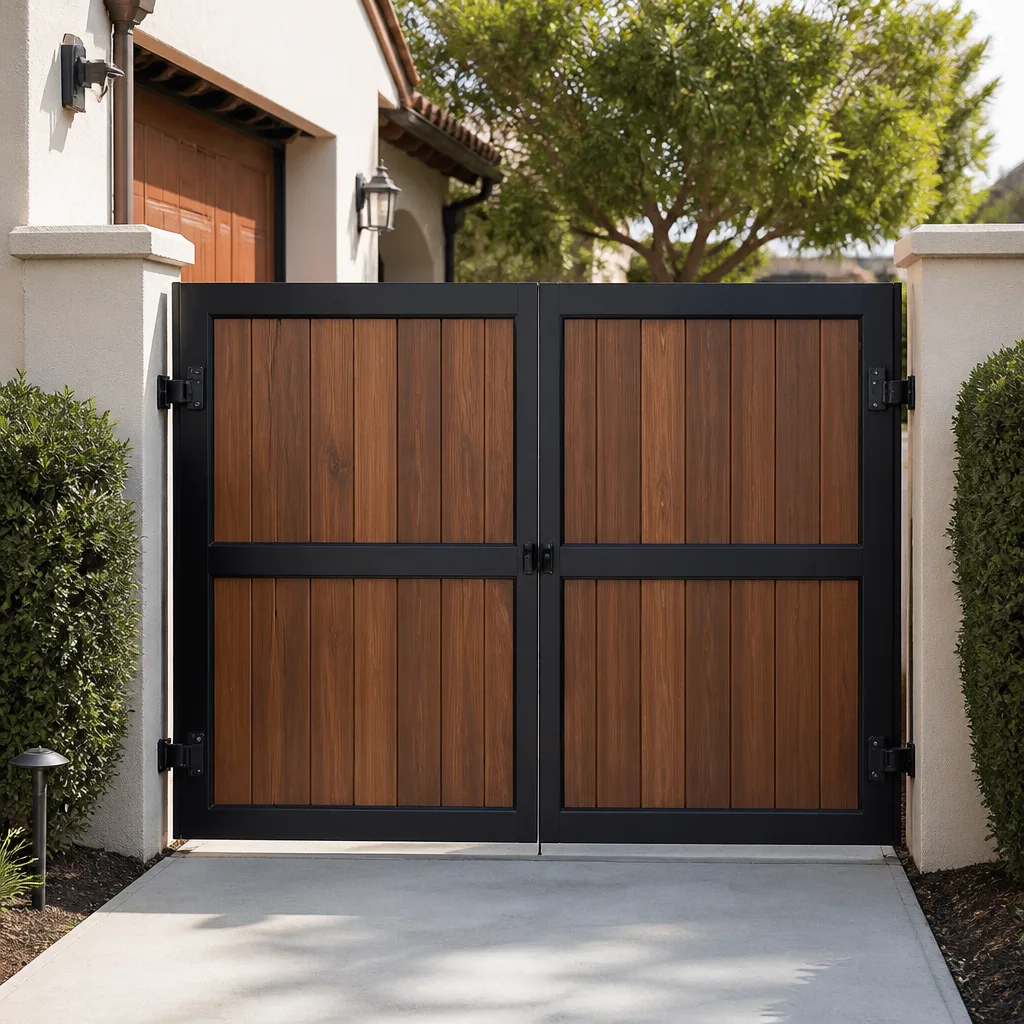 Wood & steel frame
 Farm & ranch
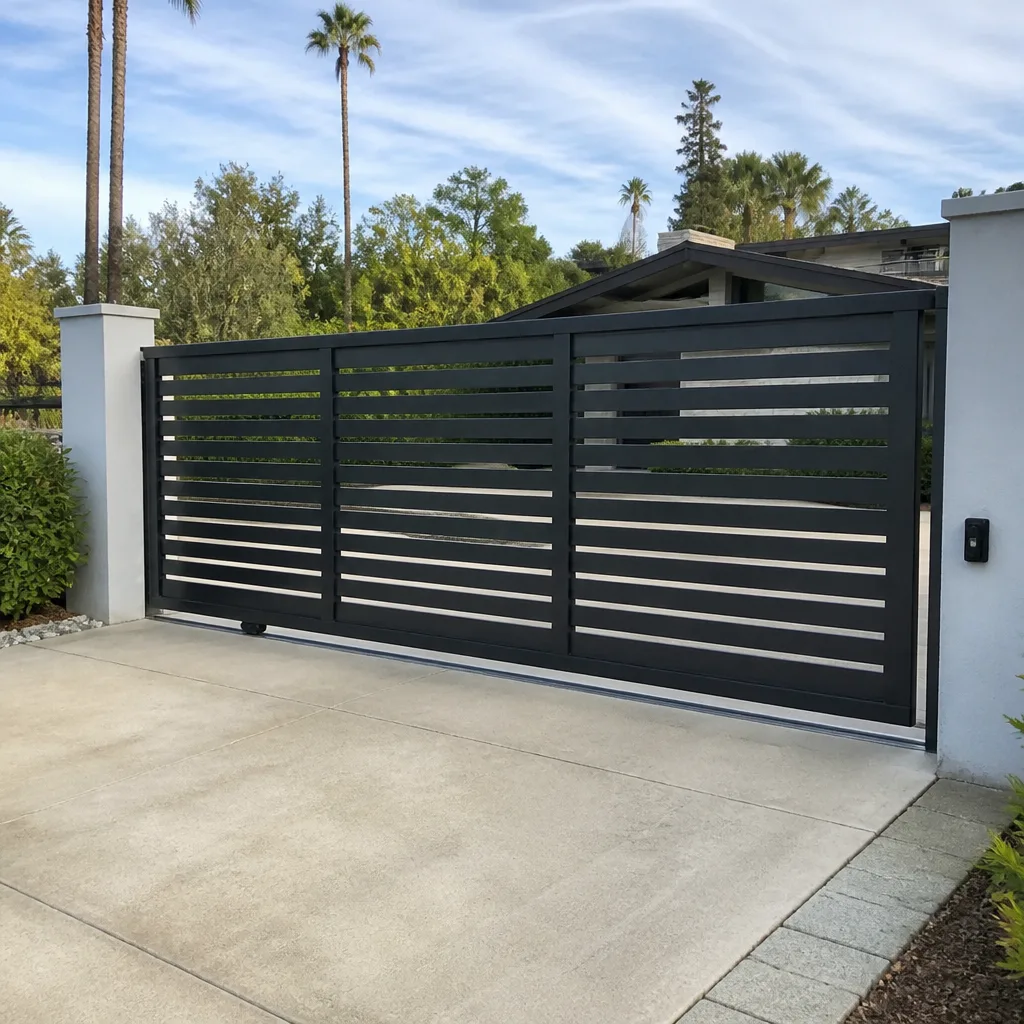 Sliding driveway gates
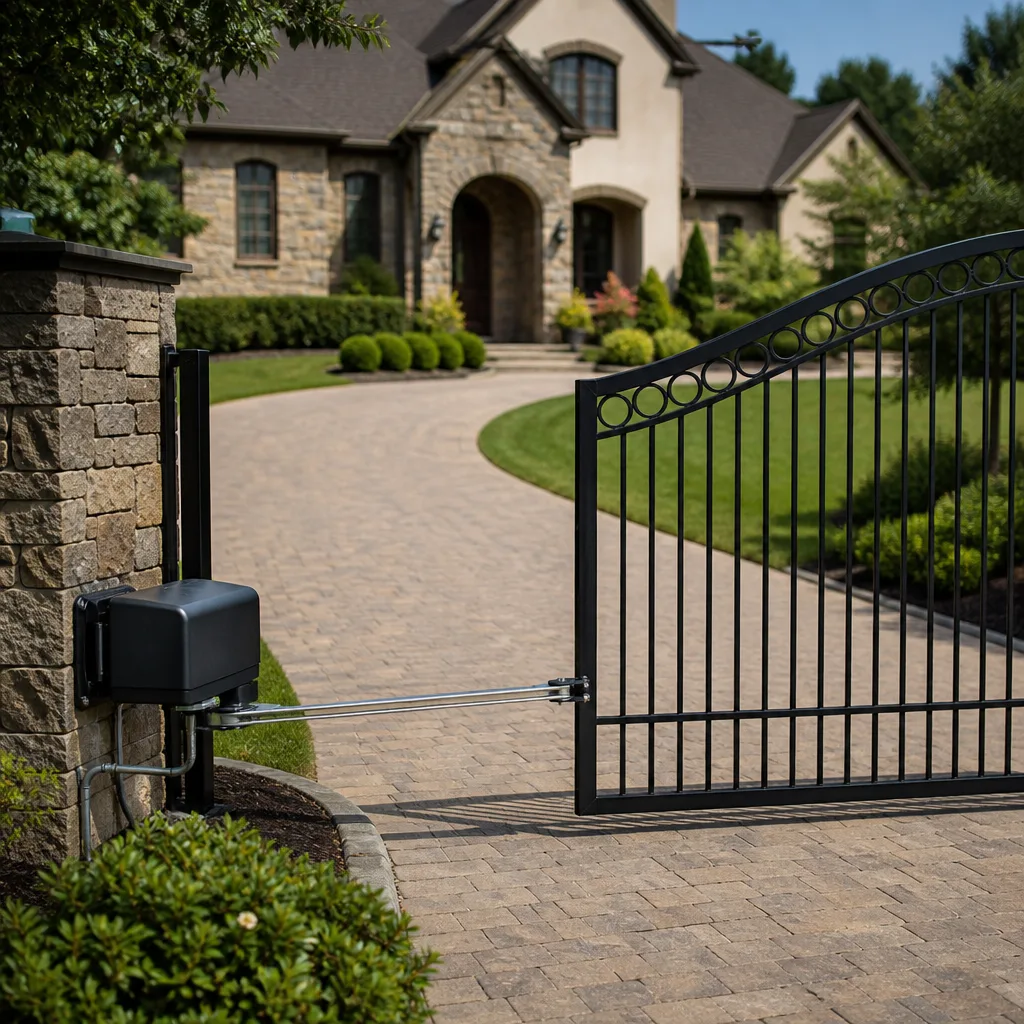 LiftMaster operators
Free on-site gate assessment - hinges, posts, and your LiftMaster or Nice gate operator checked before anything is quoted
The assessment is free and the quote is the invoice.
Get your free estimateSeasonal Gate Repair Care for Pomona: Year-Round Homeowner’s Guide
Pomona’s “mild” climate is only mild if you’re human. Gate operators regularly see 140°F+ temperatures inside their housings during August, well above the rated operating range of most stock capacitors. That heat doesn’t just strain components. It shortens their life, sometimes by half. This guide walks through the three distinct stress cycles that actually shape gate wear in Pomona, and what you should do before, during, and after each one. For a deeper look at local options, read Choosing the Right Gate Repair Brand: A Buyer’s Guide for Pomona.
Styles & brands we work with
- Wrought iron
- Wood & steel frame
- Farm & ranch
- Sliding driveway gates
- LiftMaster operators
Quick Answer
Gate maintenance in Pomona should be timed around three local stress cycles: summer heat peaks (June through September), Santa Ana wind season (October through January), and the short wet winter (December through March). If you check your operator internals for heat damage in September, tighten and lube all hardware before the first Santa Ana, and clear drainage after the last rain, you’ll prevent most of the failures we get called for in Pomona. Expect to spend two to three hours per year on seasonal maintenance, split across those windows.
Table of Contents
- Summer Heat and What It Does to Gate Operators
- Santa Ana Wind Season: Swing Gates vs. Slide Gates
- Wet Winter: Drainage, Rust, and Moisture Intrusion
- How to Time Lubrication and Battery Replacement Around Pomona’s Climate
- End-of-Summer Inspection Routine for Hillside and Foothill Properties
- Track Channel and Debris Management for Slide Gates
- Common Mistakes to Avoid
- When to Call a Professional
- Frequently Asked Questions
- The Bottom Line
Summer Heat and What It Does to Gate Operators
Between June and September, Pomona regularly pushes into the high 90s. The air temperature is one thing. The temperature inside a gate operator housing is another. Dark metal boxes sitting in direct sun absorb heat all afternoon. We’ve measured housings at over 140°F, and that’s before accounting for the heat the motor itself generates when running. See The Complete Gate Repair Guide for Pomona Homeowners for a full overview of climate-related wear.
Heat attacks gate systems in three ways, and you should understand all three because they fail in a predictable order.
Control boards are the first casualty. Stock capacitors are typically rated for 105°F ambient. When the board sits at 140°F for hours every afternoon, the capacitor electrolyte dries out. The first symptom is usually intermittent behavior: the gate opens sometimes, not others. Or it opens fine but won’t close. Homeowners often assume a remote battery problem and replace the remote. The remote is fine. The capacitor is dying.
Battery backups degrade faster in heat. If your gate has a battery backup, which many newer DoorKing and LiftMaster units do, the heat is quietly killing it. A battery rated for three to five years in coastal temperatures might last two in Pomona’s August. Worse, a failing battery can damage the charging circuit on the control board.
Operators run harder in heat. Thermal expansion makes chain and belt systems run slightly tighter. Gear-driven operators, common on Viking and Elite systems, feel the extra friction as increased amp draw. That increased draw stresses the transformer. It’s a cascade. The parts that die first are never the ones you’d guess.
What you can do, without opening a control panel you’re not qualified to work in:
- Provide shade for the operator housing. A simple shade structure, or repositioning a gate post-mounted operator to the shaded side, can drop internal temps by 15 to 25 degrees. That’s the difference between a capacitor lasting five years and lasting ten.
- Check for ventilation obstructions. Many operator housings have small vent slots. If they’re clogged with dust or spider webs, heat can’t escape. Clean them with a dry brush, not water.
- Listen for changes. If your gate sounds slower or more labored in August than it did in May, that’s thermal strain. Take note. Don’t wait for the failure.
One more thing: if you have a solar-powered gate operator, which is common in Pomona’s rural northeastern edge, summer heat has a second effect. Solar panel efficiency drops as panels get hotter. You may see reduced charging performance in August even with clear sky. That’s normal, but it’s worth a panel cleaning in late spring.
Santa Ana Wind Season: Swing Gates vs. Slide Gates
Santa Anas hit Pomona from October through January, often with gusts above 40 mph and occasionally past 60. Those winds don’t just move loose objects. They put sustained lateral load on every gate panel in the city. And swing gates and slide gates respond to that load in completely different ways.
Swing gates bear the worst of it. A solid-wood or ornamental-iron swing gate is a sail at 50 mph. The wind pushes against the full face area, and that force transfers to the hinges, the operator arm, and the latch. What happens over a wind season? Hinges loosen. Operator arms develop play at the attachment points. And the latch or lock takes repeated hard stops as the gate bangs against the striker plate on each gust. By December, a gate that latched cleanly in September will often rattle or fail to catch.
We service more swings than slides in Pomona’s wind season, and the failures are almost always mechanical wear, not operator control issues.
Slide gates have a different problem: debris. Slide gates move along a track channel at ground level. Santa Ana winds carry dry leaves, dirt, twigs, and the occasional plastic bag straight into that channel. The gate’s wheels then crush the debris as they pass. Within days, the gate starts jerking, or the chain jumps teeth, or the motor works harder than it should. If the track channel has drainage holes, they clog. Then the first rain creates a muddy slurry that the gate grinds through.
What we tell homeowners before the wind season starts:
- For swing gates: hand-check the four hinge bolts and the two operator arm bolts with a socket set. If anything moves by hand, it’s getting worse in the wind.
- For slide gates: clear the track channel weekly during Santa Ana months. It’s five minutes with a trowel and a shop vac. It prevents the most common slide gate failure we see all year.
- For both: walk the gate path after a big blow. Look for bent tracks, loose fences adjacent to the gate, or shifted posts.
This is also the season where we see Ghost Controls and Mighty Mule aftermarket systems struggle. Their operator brackets are typically lighter-duty than factory systems, and wind loading accelerates bracket fatigue. If you own one of those systems, inspect the brackets for hairline cracks every fall.
Wet Winter: Drainage, Rust, and Moisture Intrusion
Pomona gets most of its rain between December and March, and while the totals are modest by national standards, the storms arrive in bursts. A few inches in 24 hours is common. That’s enough to reveal every drainage mistake around a gate installation.
Post footings are the big one. Gate posts are set in concrete. If the ground around the post slopes toward the post, water collects at the base. In clay-heavy Pomona soil, that water sits. Over time, repeated wet-dry cycles loosen the soil-to-concrete bond. A gate post that was solid in November can develop a very slight lean by March. That lean throws off the latch alignment, changes the bearing load on the hinges, and makes the operator work against gravity.
The fix is simple, and it’s ground-level work you can do yourself. Grade the soil so water flows away from both gate posts. You may need to add a small amount of decomposed granite or topsoil. Every year. It’s the highest-value ten-minute job on this entire page.
Ferrous hardware rusts fast once water sits on it. Hinge pins, chain links, track wheels, and latch components. Galvanized or powder-coated parts resist rust, but any scratch or wear spot becomes an entry point. In Pomona’s low-humidity months, surface rust is cosmetic. After the rainy season, it starts eating threads and bearing surfaces.
Control board enclosures are not always waterproof. Many residential operators have an IP54 or IP55 enclosure. That handles splash, but not a hose. We’ve seen boards short out because a homeowner rinsed the gate with a hose and water ran down into the enclosure’s cable entry. If you wash your gate, keep the water stream away from the operator housing. If the housing’s gasket is cracked, the first rain will get in.
After each significant rain event, do this:
- Walk the full gate path and look for standing water anywhere near posts or track.
- Cycle the gate and listen for changes in sound. Moisture in moving joints often produces a faint creak that hardens into a bind.
- Check the operator housing for condensation on the inside of any window or indicator light cover. If it fogs, there’s moisture getting in.
How to Time Lubrication and Battery Replacement Around Pomona’s Climate
Most gate manuals say to lubricate hinge pins and chain every six months. Most homeowners don’t. But if you’re going to do it twice a year, Pomona’s climate gives you the only two dates that matter: late April and mid-October.
Late April, because you want the gate lubricated through the hottest stretch, when heat expands metal and increases friction. Mid-October, because you want lubrication fresh before the Santa Ana wind season adds load, and before the rains can wash it away.
What to lubricate:
- Hinge pin surfaces (swing gates): use a dry graphite or PTFE spray. Avoid heavy greases, which attract dust in Pomona’s dry months.
- Chain and rail surfaces (slide gates): use a light machine oil or dedicated roller-chain lubricant. Silicone-based sprays are also fine. Wipe excess.
- Latch mechanisms and strike plates: a small squirt of dry lube into the moving parts, twice a year.
- Track wheels and bearings: if the wheels have grease fittings, hit them. If they’re sealed, leave them alone. Most residential track wheels are sealed and should not be greased.
Battery replacement: if your operator has a backup battery, don’t replace it on an arbitrary anniversary date. In Pomona, replace it in early October, before Santa Ana season, if it’s more than two years old. That’s when you need it most. A gate with a dead backup battery locks you out of your own driveway during the exact week the power blinks out from a wind-toppled line. DoorKing and LiftMaster systems both have battery test functions in their control boards. Use them in September.
End-of-Summer Inspection Routine for Hillside and Foothill Properties
Pomona’s northeastern edge, the neighborhoods running up toward Phillips Ranch and the foothills, sees wider temperature swings than the flat parts of the city. Hotter afternoons. Cooler nights. And convection winds that the valley floor doesn’t get. The Electric Gate Repair in Pomona calls we get from that zone cluster around one issue: thermal cycling fatigue.
When metal components heat and cool repeatedly across a 40-degree daily range, two things happen. Fasteners work loose, and solder joints on control boards start developing micro-fractures. The failures are sudden. A gate that worked at 6 p.m. is dead at 6 a.m. because a joint that flexed all through August finally cracked open during the cooling cycle on a September night.
Here’s a simple end-of-summer inspection routine for hillside properties. It takes 20 minutes:
- Check every visible fastener. Hinge bolts, track bolts, operator mount bolts, ground rail anchors. If you own a socket set, you can do this. If you find anything loose, tighten it before the Santa Anas arrive.
- Look at the operator housing for signs of heat stress. Fading, chalky powder coating, or a slight warp in plastic covers means the heat is beating on it. Consider adding shade.
- Open the manual release and cycle the gate by hand. It should move smoothly with no binding. If you feel a catch, find it before the operator has to work against it.
- Check the safety sensors. Misaligned photo eyes cause intermittent failures that most homeowners blame on the remote. Align them now.
- Run a full cycle and listen. New sounds in September become breakdowns in October.
If that routine turns up anything you’re not sure about, call us. We’d rather catch a loose track bolt in September than replace a burned-out transformer in November.
Track Channel and Debris Management for Slide Gates
Slide gates make up a significant share of Pomona’s driveway gate installations, and they have one chronic weak point: the ground-level track channel. It’s an open trough that catches everything. Leaves in fall. Mud after rain. Pebbles from driveways. Broken glass from the street. We’ve found dead batteries, dog toys, and a surprising number of spoons inside track channels.
The channel itself is a piece of formed steel or aluminum, usually U-shaped, set into a concrete recess. The gate moves on wheels running inside this channel. When debris accumulates, the wheels have to climb over it. That’s what causes the characteristic jerk-and-bang motion that many Pomona homeowners just live with. It isn’t normal. It’s grinding down the wheel bearings and putting repeated impact loads on the drive chain.
Here’s a numbered process we give every new slide-gate owner:
- Clear loose debris weekly during October through January. A shop vac with a narrow nozzle gets into the channel better than a broom.
- Check the drainage holes. Most channels have weep holes along the bottom. If they’re clogged, a big rain turns the channel into a trough of standing water. Clear them with a small screwdriver.
- Inspect the wheels. With the gate stationary, run a flashlight along the track. Look for flat spots on the wheels or cracks in the nylon tire material. Replace wheels before they shatter.
- Clean the chain, not just the channel. The drive chain rides near the track and collects grit. Wipe it down with a rag, then re-lube lightly. A buildup of sandy paste on the chain is a sure sign it’s been lubed but never cleaned.
- Look at the end stops. Slide gates have physical stop blocks at each end of travel. If they’re crushed or out of position, the gate’s limit switches are likely also out of adjustment. This is one of the first things we check on a Gate Installation in Pomona when retrofitting an older slide system.
If you have a Linear or Viking slide operator, pay particular attention to the chain tension every fall. Heat expands the chain, then cooling contracts it. A chain that’s slightly loose in August can be too tight in January. Overly tight chains kill drive motors.
Common Mistakes to Avoid
- Lubricating without cleaning first. Spraying lube onto a chain or hinge already caked with grit creates a grinding paste. Wipe surfaces clean, then lube. The clean-then-lube sequence matters more than the lube brand.
- Ignoring slow operation because “it still works.” A gate that moves 20% slower than it did last year is telling you something. Slower movement means higher amp draw, which means hotter motors, which means shorter life. Slow is a symptom, not a quirk.
- Washing the gate with a pressure washer. High-pressure water forces its way past seals and into housings. Several Ghost Controls and Mighty Mule failures we see each year trace back to a Saturday afternoon pressure-wash session. Use a garden hose with a gentle spray, and keep it away from the operator.
- Painting over rust without treating it. Putting paint over active rust just hides the problem while the corrosion continues underneath. Treat rust with a converter, then paint, then plan to eventually replace the affected hardware.
- Replacing the remote when the gate acts up. Intermittent operation is usually a control board, sensor, or power problem. A new remote is the most common wasted purchase we see.
- Waiting until the gate fails to look at it. Most gate failures in Pomona give two to four weeks of warning. A sound change, a slower speed, a flickering LED, a latch that needs a second push. Noticing those early saves real money.
When to Call a Professional
Some jobs are homeowner-level. Others are not. If your gate is making a new noise, moving slower, or failing intermittently, a professional diagnostic is the fastest and often cheapest path. The mistake most people make is waiting until the gate is fully dead, which turns a simple fix into a parts replacement. If your swing gate is binding, your slide gate is jerking, or your operator shows a fault code you don’t recognize, that’s the moment to call. Control board diagnostics, capacitor replacement, chain tension adjustment under load, and any work on a motorized system should be handled by someone who does this every day. If you’re in Pomona, Gate Repair Pomona home offers free estimates and upfront pricing. Call (855) 382-5690 and we’ll tell you what’s wrong before we quote you a dollar.
Frequently Asked Questions
Twice a year, aligned to the climate. One maintenance pass in late April, before the heat peaks, and one in mid-October, before Santa Ana winds and rain. Each pass takes 30 to 45 minutes and includes cleaning, lubrication, fastener checks, and a full open/close cycle while listening for changes.
Manual gates need hinge, latch, and track maintenance, and nothing involving electronics or motors. Electric gates need everything a manual gate needs, plus control board inspection, battery testing, sensor alignment, and force settings. The mechanical side is the same. The electrical side adds roughly 15 minutes to each maintenance pass. If you have a Linear, Viking, DoorKing, or Ghost Controls operator, meet its specific maintenance schedule in the manual.
Heat is the leading cause of control board failure we see in Pomona. Operator housings in direct sun reach 140°F or more in summer, which exceeds the rated operating temperature of most stock capacitors. Heat also causes batteries to degrade faster and motors to work harder due to thermal expansion. It is not exaggerated. It’s the single biggest environmental threat to your gate system.
Most newer DoorKing and LiftMaster systems have a battery test function accessible through the control board. Run it in September. If the battery is more than two years old and it fails the test, or the system doesn’t have a test function, replace it before the wind season. A dead backup battery doesn’t show any symptom until the power goes out and the gate won’t move.
Most gates are worth fixing. The operator, bearings, chains, and control boards are all replaceable parts. If the posts are solid, the hinges aren’t pulling out, and the gate panel itself isn’t rusted through, our Gate Repair services put it back in service for a fraction of replacement cost. We’ll tell you honestly when replacement makes more sense. Call (855) 382-5690 for a free evaluation at your Pomona property.
Yes. We keep same-day availability for urgent repair calls in Pomona. If your gate is stuck open, stuck closed, or making grinding noises, call (855) 382-5690 and we’ll get a technician out to diagnose it. The price is quoted and agreed before any work starts.
The Bottom Line
Pomona’s climate doesn’t beat up gates the way a Minnesota winter does, but it has its own pattern. Heat kills electronics slowly. Wind works hardware loose. Water finds the drainage mistakes. The homeowner who works with that pattern, lubricating in April and October, checking fasteners before the Santa Anas, cleaning track channels weekly in fall, and grading dirt away from posts every winter, gets years more life out of their gate system than the homeowner who waits for a symptom. For more guides & resources on keeping your gate running, see our blog. The calls we take are overwhelmingly from people in the second group. Be in the first group. And when you do need a hand, we’re here.
Written by the team at Gate Repair Pomona, serving Pomona since 2014.
See the difference
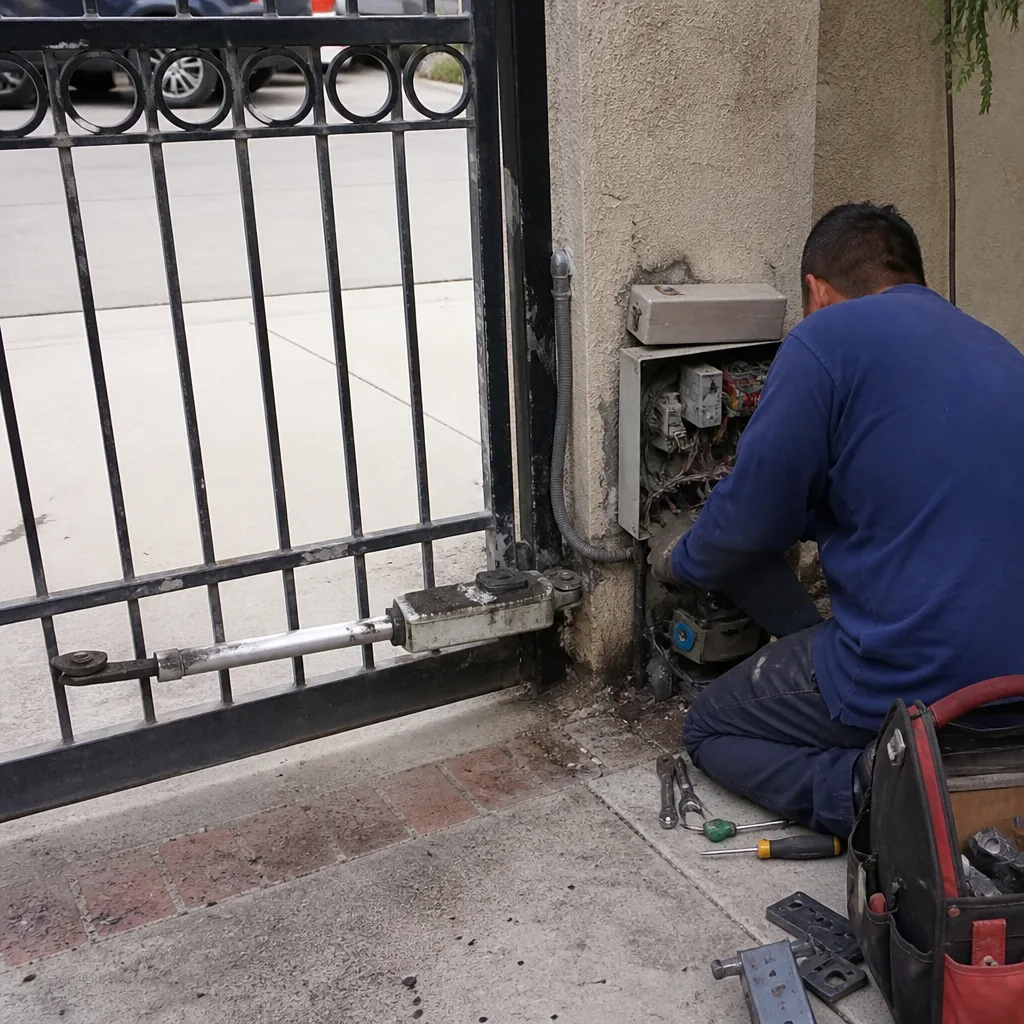 Before
 After
 Before
 After
 Before
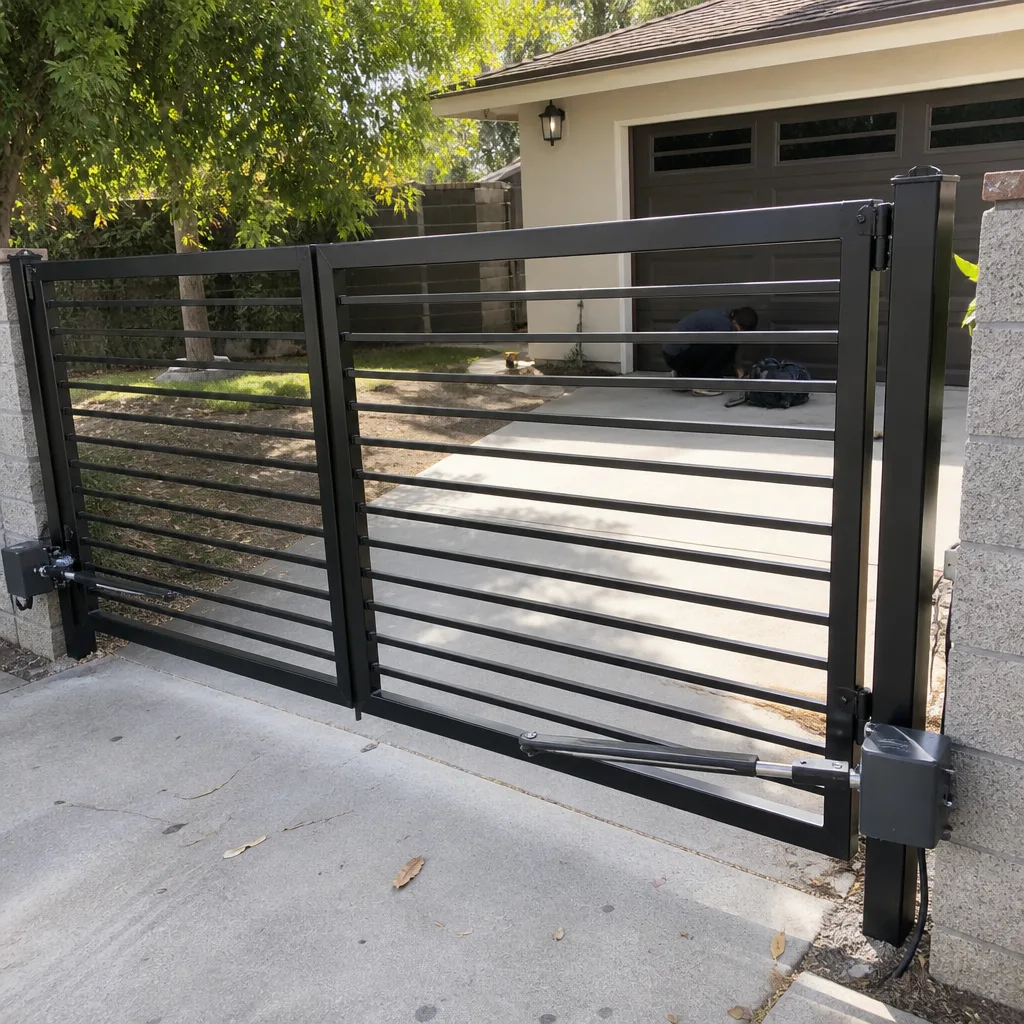 After